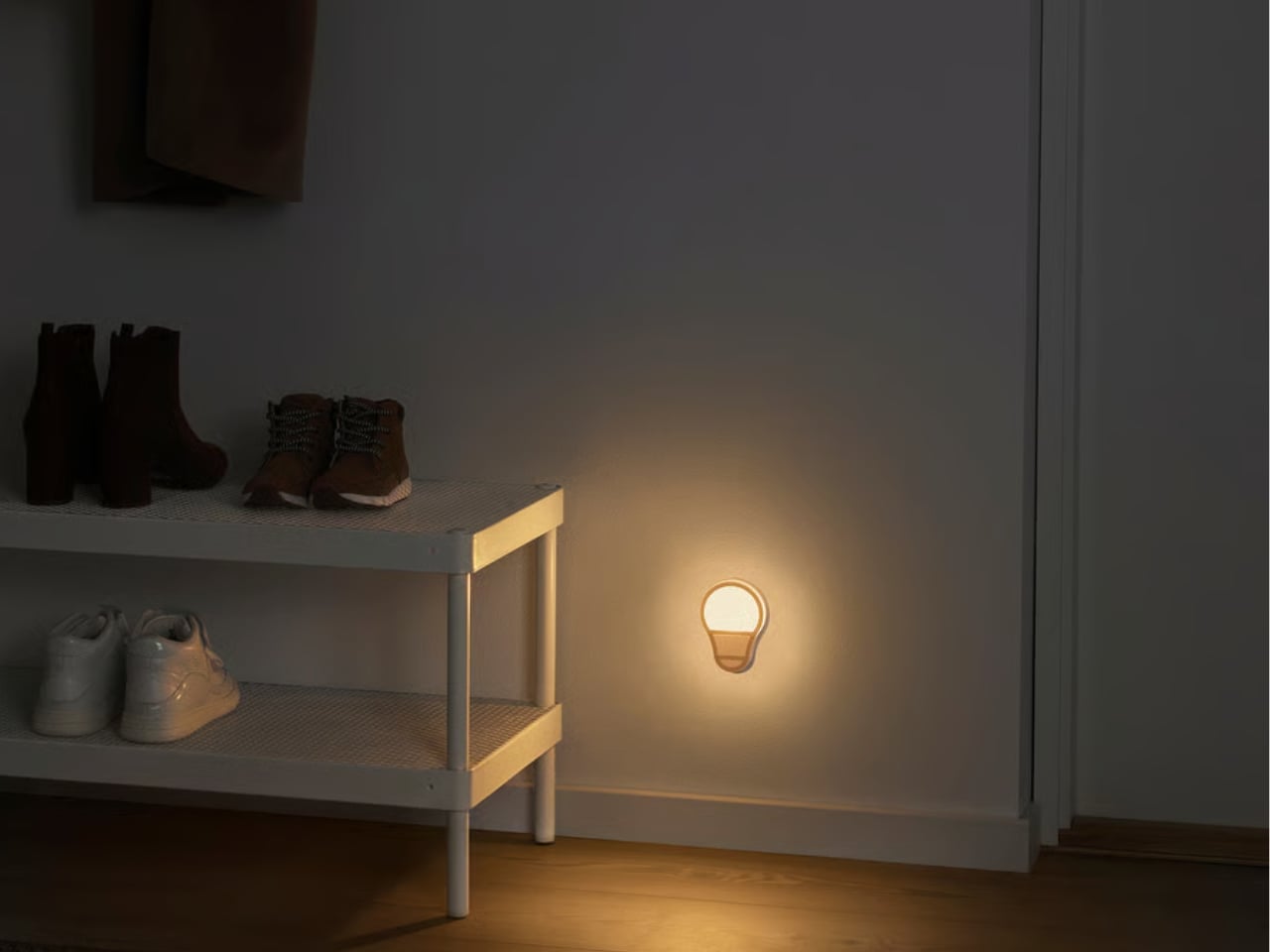
IKEA has always had a knack for making you feel clever. You walk into the store needing a bookshelf, and you leave with a bag full of small, inexpensive things you didn’t know existed but now can’t imagine living without. The ANKARLÄGG is exactly that kind of product. It’s a battery-operated LED nightlight shaped like a lightbulb, it sticks to any surface, and it costs about as much as a nice sandwich. On paper, it barely qualifies as news. In practice, it’s one of those quiet little design wins that remind you why IKEA remains so good at what it does.
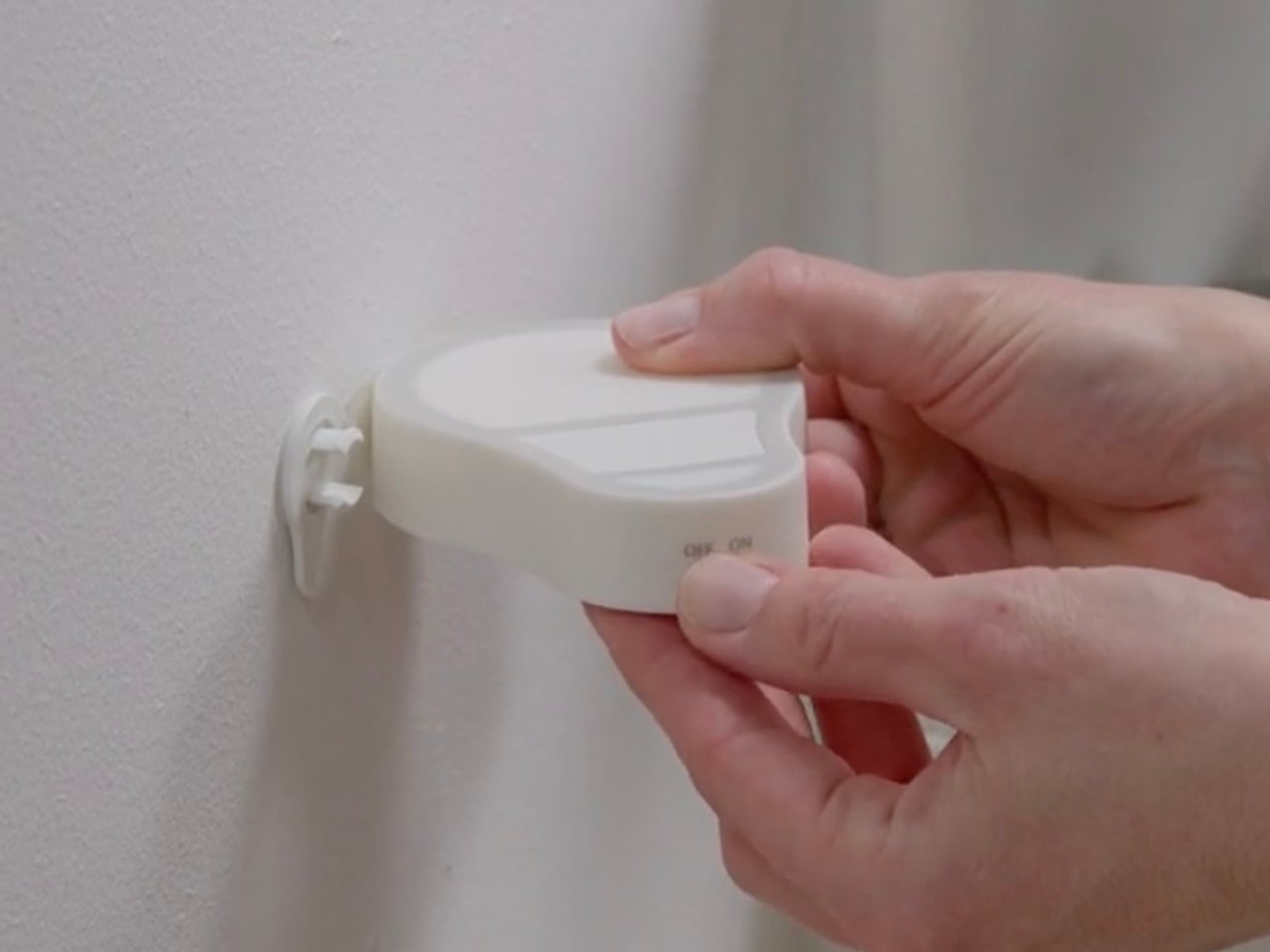
Designed by Bruno Adrien Aguirre, the ANKARLÄGG is a motion-sensing nightlight that runs on two AAA batteries. No cords, no plugs, no electrician. You peel the backing off a double-sided adhesive pad, press the light against a wall, and you’re done. When someone walks within three meters of it in a dark room, it switches on. Thirty seconds later, with no further movement detected, it turns itself off. During the day, even if you’re dancing in front of it, it stays dark. The batteries last about six months under regular use, which IKEA defines as roughly ten activations per day.
Designer: IKEA
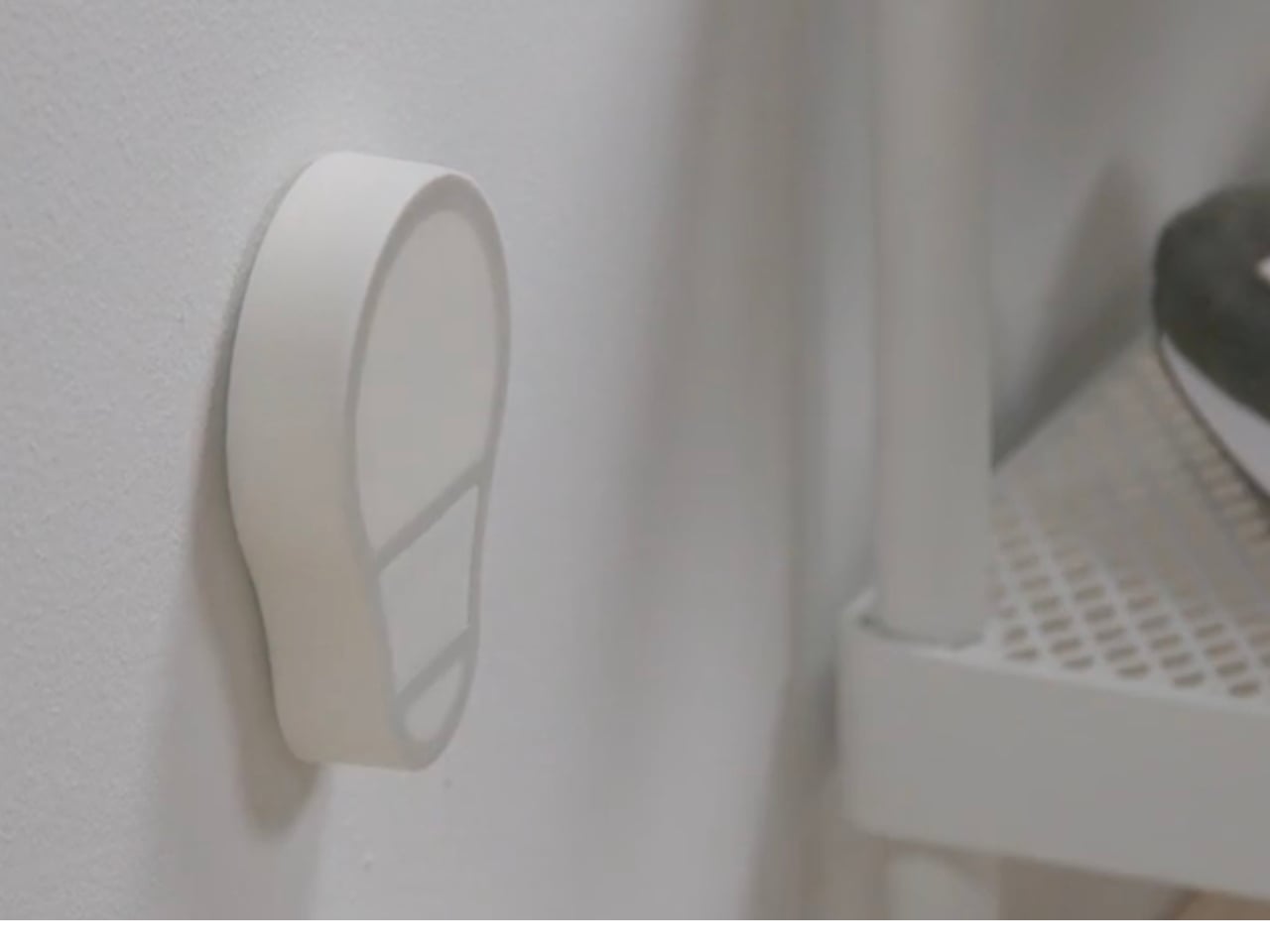
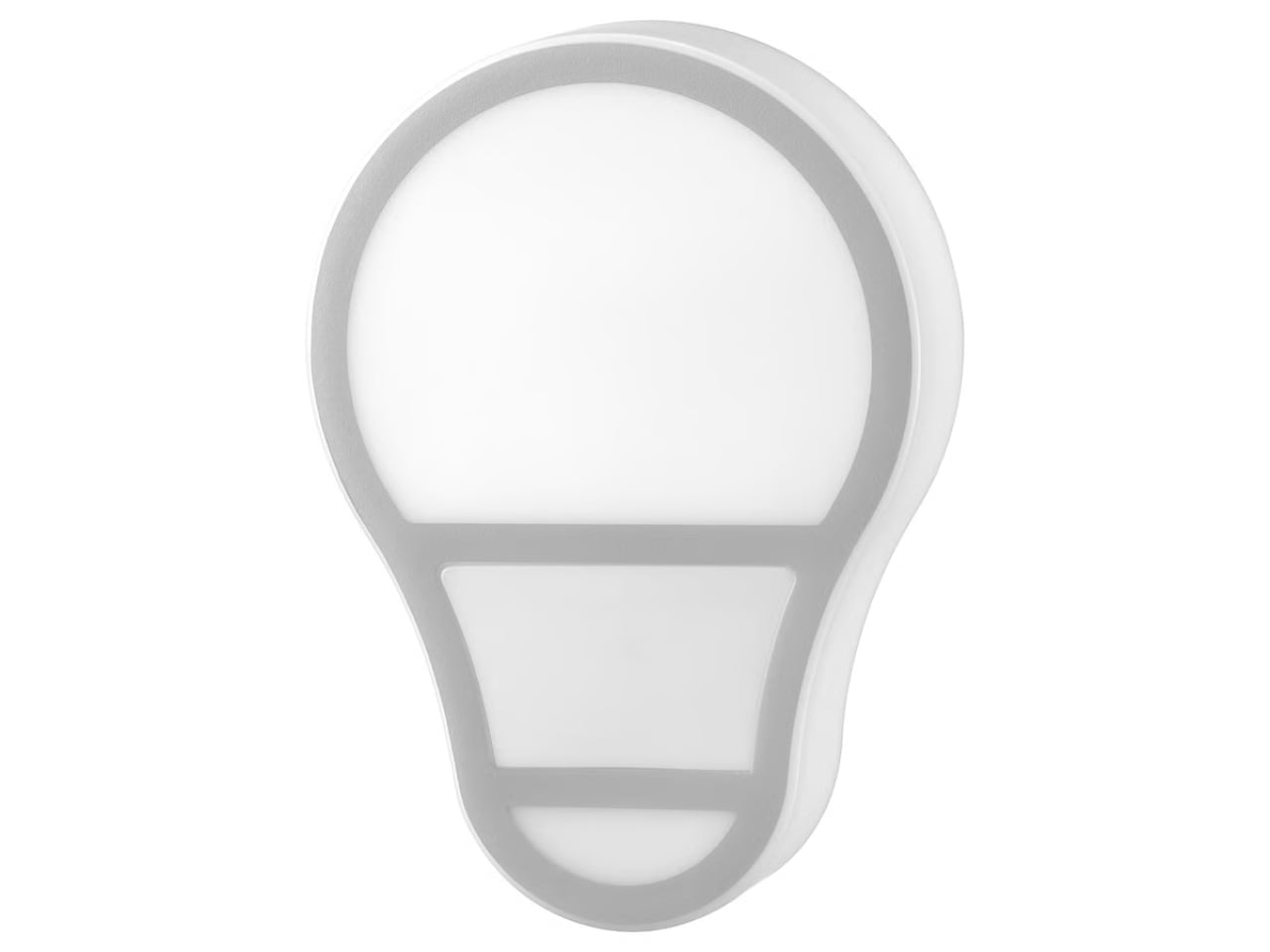
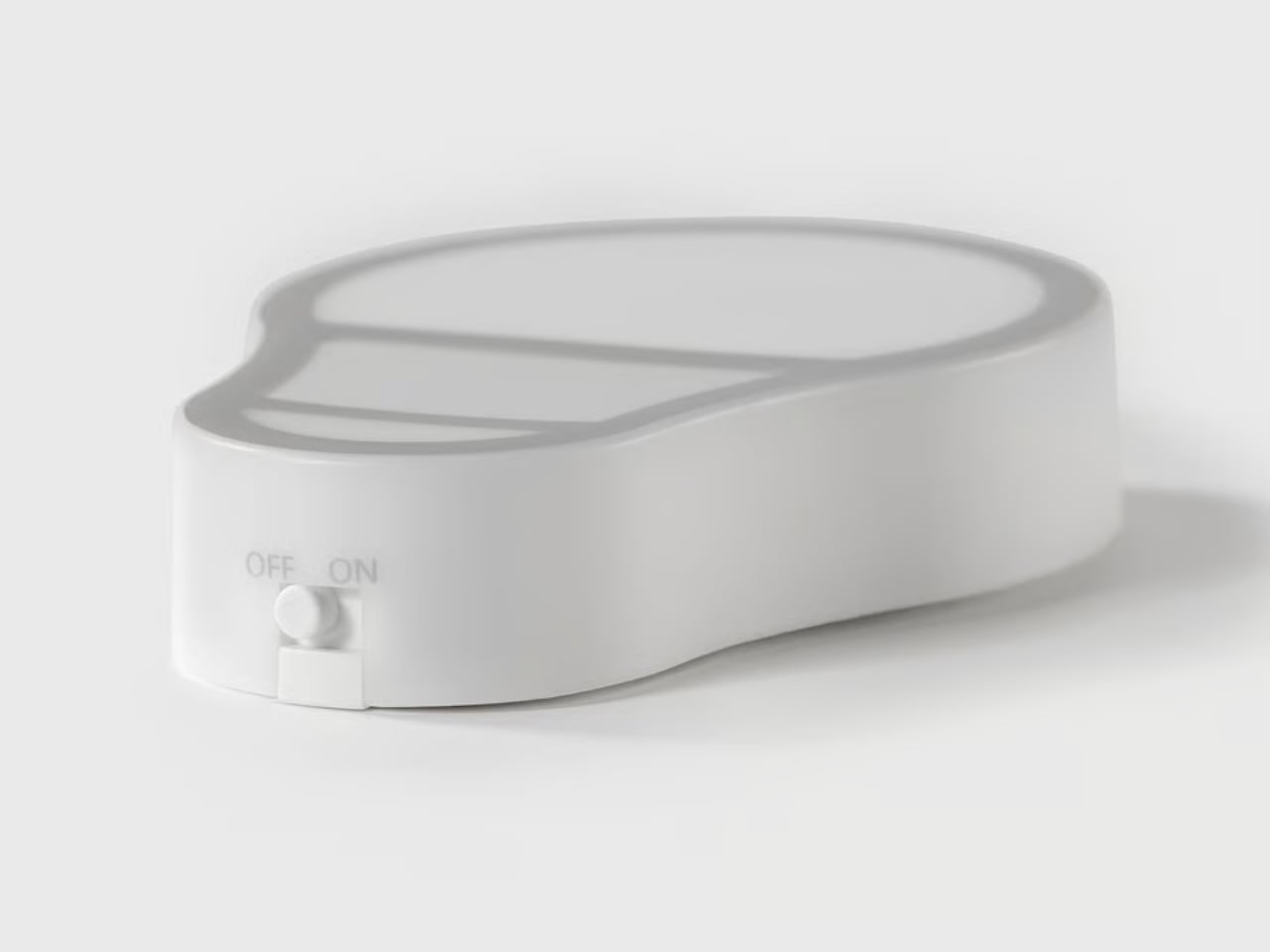
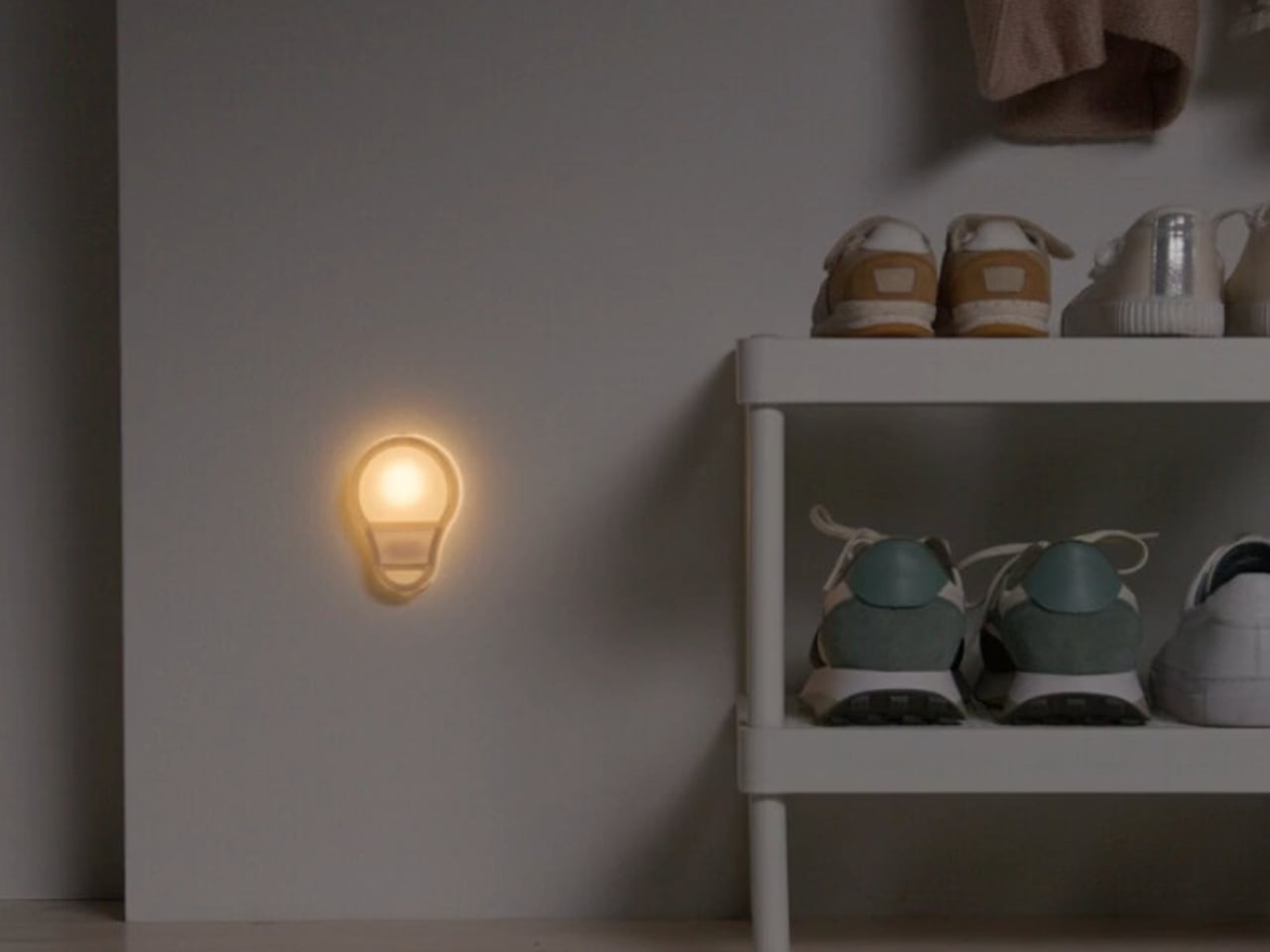
The shape is what gets me. The ANKARLÄGG looks like an outline of a classic lightbulb, almost like a cartoon sketch brought into three dimensions. It’s not trying to be invisible or blend into your wall. It’s a little wink, a product that acknowledges what it is by wearing the silhouette of the thing it’s replacing. The base is made from polycarbonate plastic, which gives it durability, while the frosted cover made from polypropylene helps diffuse the light into something soft and even. At 105 millimeters tall and 75 millimeters wide, it’s about the size of a pear. The whole unit weighs 80 grams, which is nothing.
I think the reason this kind of product resonates is that it solves a problem most of us have just learned to accept. We stumble down dark hallways at 2 a.m., we fumble around the inside of closets, we guide ourselves along stairways by muscle memory. We’ve been doing it forever, so we don’t really think of it as a problem. But then someone puts a tiny stick-on light in front of you that costs 39 Swedish kronor, and suddenly you realize how unnecessary all that fumbling was. Good design often works that way. It doesn’t announce itself with drama. It just quietly removes a friction you’d stopped noticing.
What I appreciate about the ANKARLÄGG is that it doesn’t try to be smart in the way tech companies define smart. It doesn’t connect to Wi-Fi. It doesn’t need an app. It doesn’t want to join your ecosystem. It uses a basic infrared sensor to detect motion and an ambient light sensor to know when it’s dark. That’s the entire feature set. In an era when even toothbrushes want to sync with your phone, the restraint here feels genuinely refreshing. It’s a product that knows exactly what it needs to do and does nothing more.
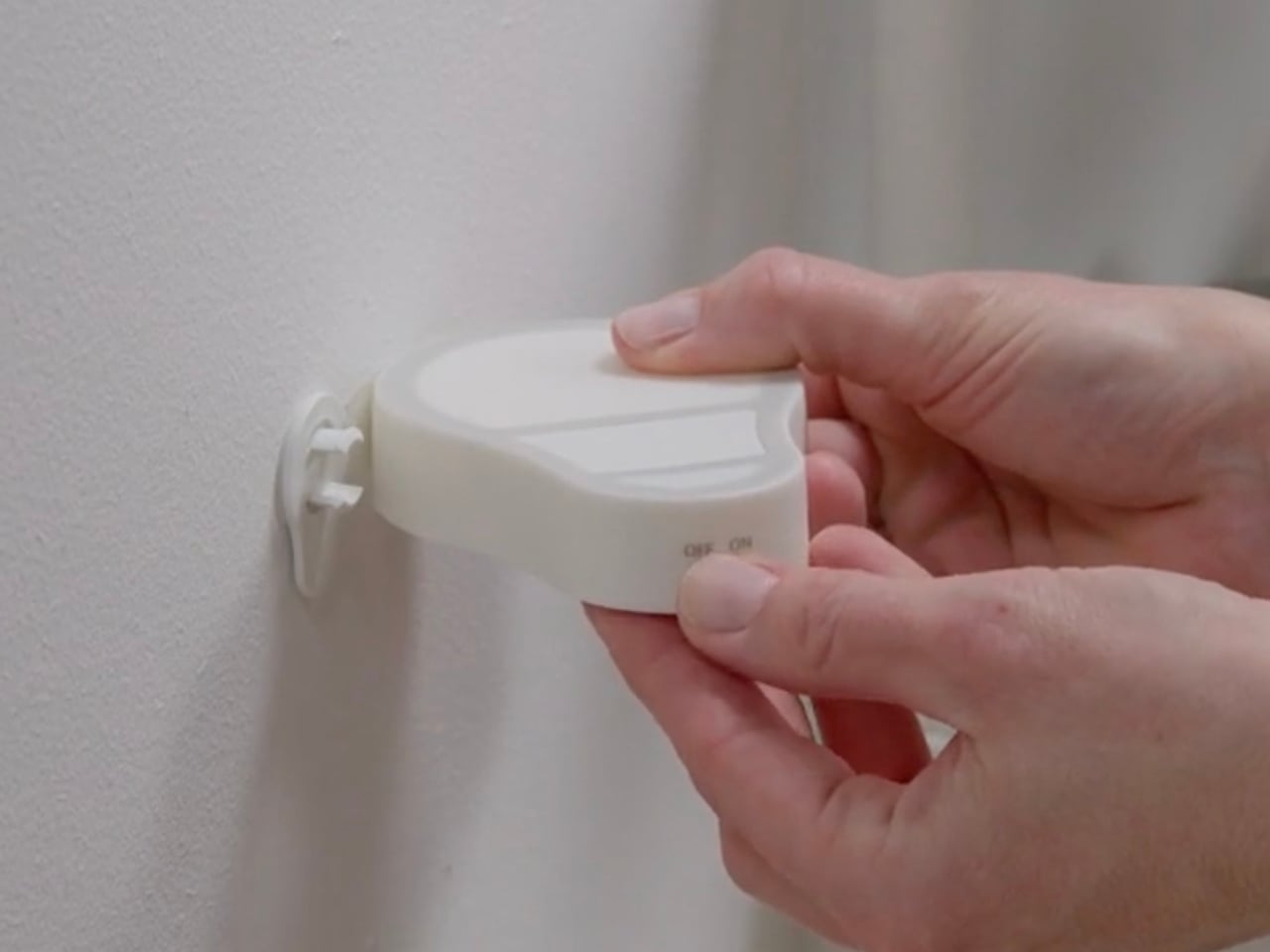
The installation simplicity is worth emphasizing too. IKEA products are famous for their assembly instructions, those wordless cartoon manuals that have spawned a thousand jokes. But the ANKARLÄGG barely needs instructions at all. Pop in two AAA batteries, stick it on a wall. That’s the whole process. You could explain it to a child. You could explain it to someone who has never installed anything in their life. This kind of radical simplicity is hard to achieve. It takes real discipline to resist adding features, modes, brightness settings, or app connectivity. Somebody had to say no to a lot of ideas to keep this product this clean.
The ANKARLÄGG is available now in selected IKEA stores and online. It’s a minor product in the grand scheme of the catalog, tucked somewhere between wall lamps and LED strips. But sometimes the minor products are the ones that tell you the most about a company’s design philosophy. IKEA still believes that useful, well-designed objects should be affordable and uncomplicated. The ANKARLÄGG is a small, glowing proof of that belief, shaped like the most universal symbol of a good idea.
The post IKEA Built A $4 Stick-On Light That Lasts 6 Months first appeared on Yanko Design.
from Yanko Design



0 Comments