The beach has a design problem. Everything made for it arrives wrapped in the same visual language: neon plastic, logos scaled for visibility from twenty feet away, and product names in fonts that suggest the designer’s reference material was a county fair booth. Coolers, chairs, speakers, sunscreen dispensers. The category has collectively decided that beach gear should look exactly like beach gear, and nobody seems to have questioned whether that was actually a good idea.
These five objects have a different point of view. None of them look like they were produced for a promotional photograph on a pier. Each one earns its place through a specific design decision that makes a full day at the beach easier, quieter, or a little more considered.
1. Battery-Free Amplifying Speakers
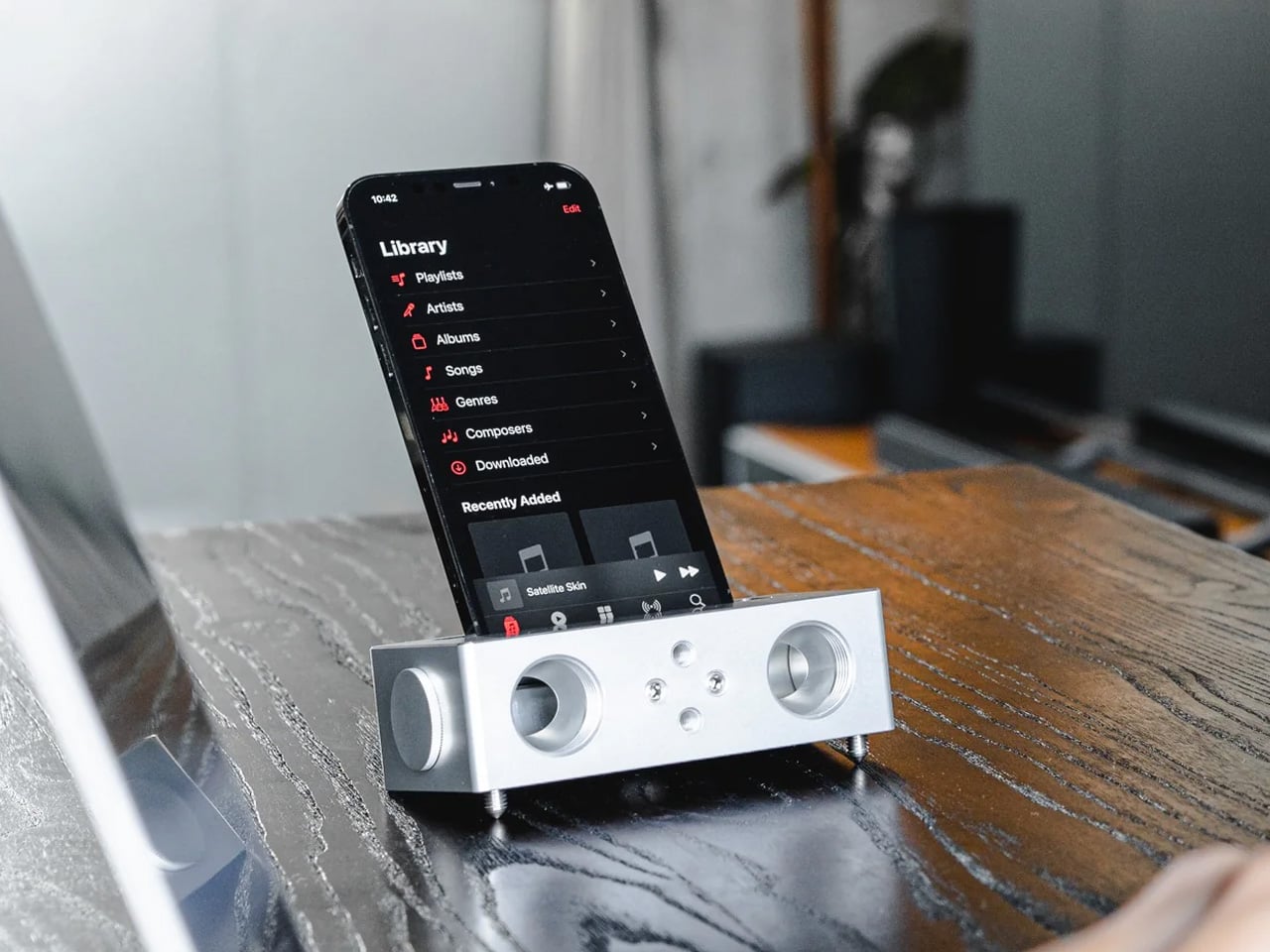
Every Bluetooth speaker brought to the beach eventually dies. The battery gives out at exactly the moment someone finds the right track, and the rest of the afternoon becomes a negotiation about whether to go back to the car. The Battery-Free Amplifying Speakers remove that problem entirely by having no battery to run out. Sound from a phone travels into the chamber and is amplified through acoustic geometry rather than electronics, with no pairing, no charging, and no indicator light to watch nervously.
The principle is the same one behind a gramophone horn or a hand cupped around a speaker: redirect sound and it gets louder. What lifts these above cheaper versions of the same idea is the internal chamber design, which reinforces rather than merely surrounds the sound. The result is noticeably fuller than the phone alone, and at the beach, where wind and open space work against you constantly, that gain matters more than a battery percentage reading or a firmware update ever could.
What We Like
- No charging means no dead speaker, no cables on the sand, and no quiet dread about how much afternoon remains before the battery is gone
- Passive amplification means the sound scales with your phone’s own speaker rather than introducing a separate and competing audio character on top of it
What We Dislike
- The volume ceiling is lower than any powered speaker, so this works for a group around a table rather than a group spread across a wide stretch of beach
- Performance is tied to the quality of the phone speaker placed inside, which varies considerably from one device to another and is entirely outside the product’s control
2. Camp Snap 2
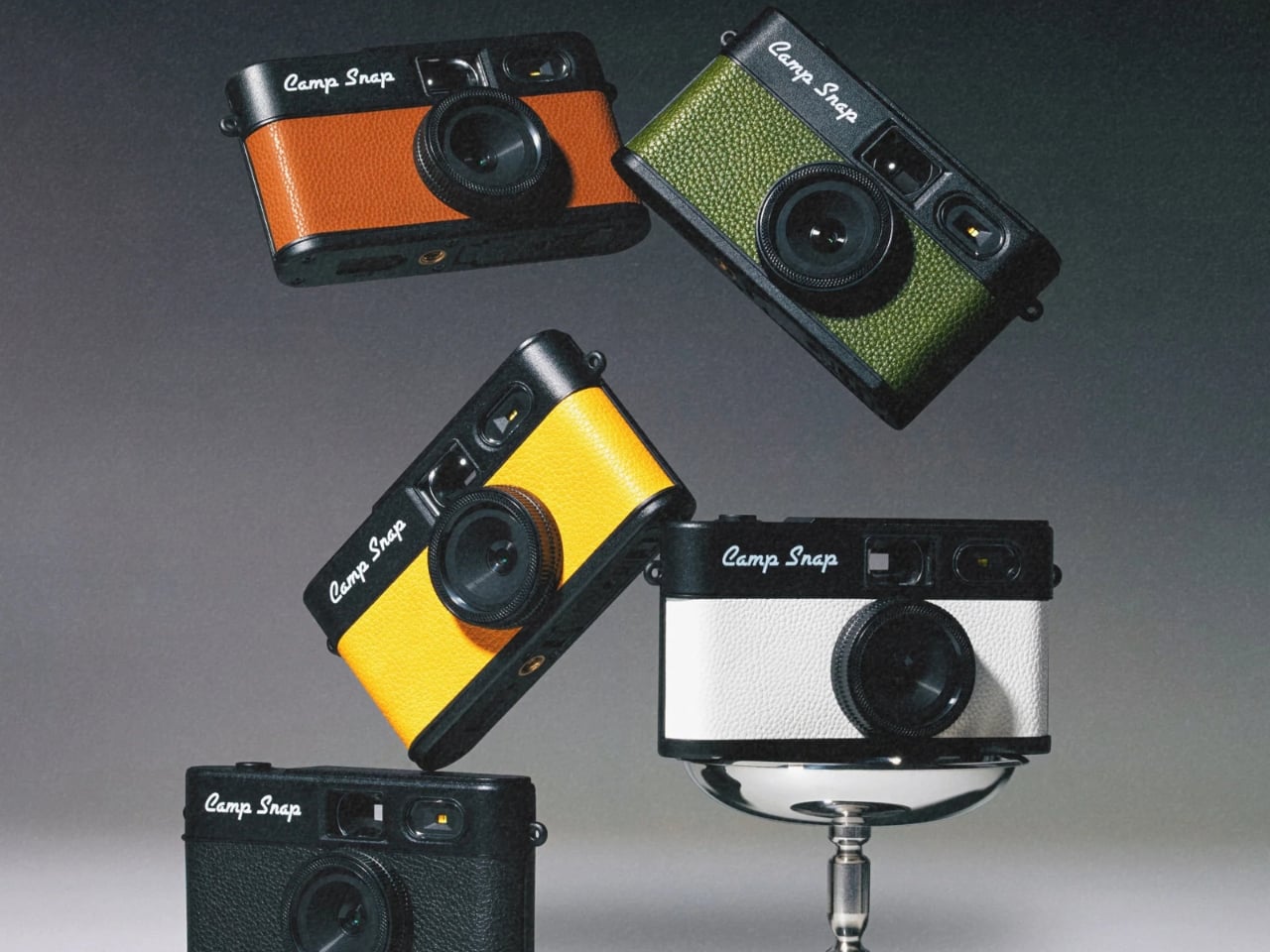
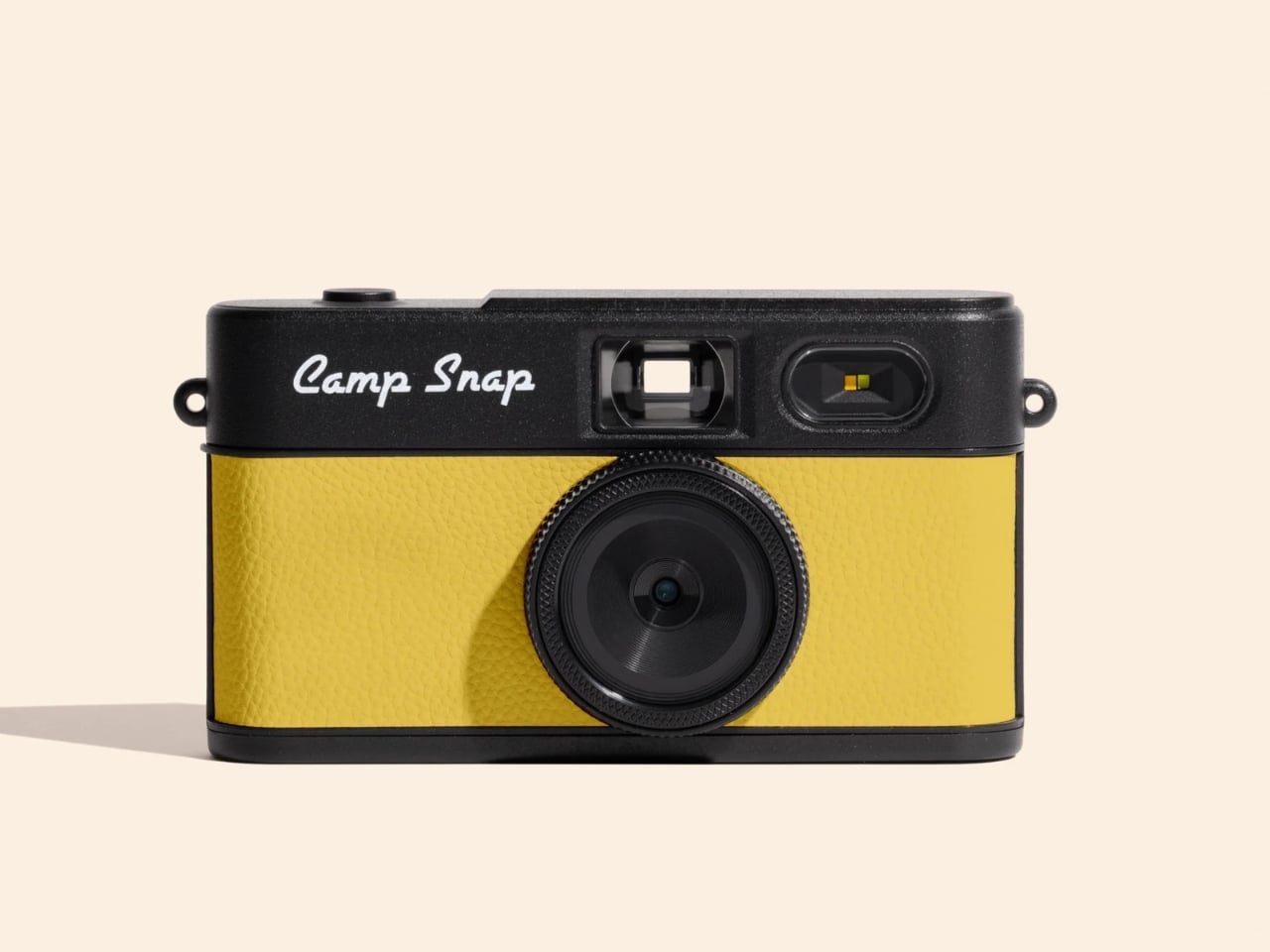
The Camp Snap 2 is a point-and-shoot with no rear screen, no Wi-Fi, and no ability to see the photograph you just took. You shoot, you download later. What sounds like a limitation turns out to be a relief. Every photograph at the beach currently involves a review session: retakes, angles held for too long, filters applied in real time while the moment moves on without you. A camera that simply takes the picture and closes the subject is a very different tool to spend a day with.
It is 15 percent slimmer than its predecessor, runs an 8-megapixel sensor, and offers six built-in looks through a physical button on the back: Standard, Vintage 1 through 3, Analog, and Black and White. It comes in nine colorways, including several translucent jelly-plastic finishes in Sunbeam Yellow, Tangerine Drift, and Strawberry Splash. It supports 30.5mm screw-in filters for anyone inclined to go further.
What We Like
- The screenless design removes the retake cycle entirely, which turns out to be the most genuinely useful design feature a beach camera can offer
- Six filter modes accessed through a single physical button is exactly the right level of creative control for a camera built around the idea of not overthinking things
What We Dislike
- No rear screen means no way to check framing or whether someone blinked, which requires a real shift in how you think about taking a photograph in the first place
- The 8-megapixel sensor produces images that are warm and characterful rather than sharp and clinical, which is either the point or the dealbreaker depending entirely on who is asking
3. DraftPro Top Can Opener

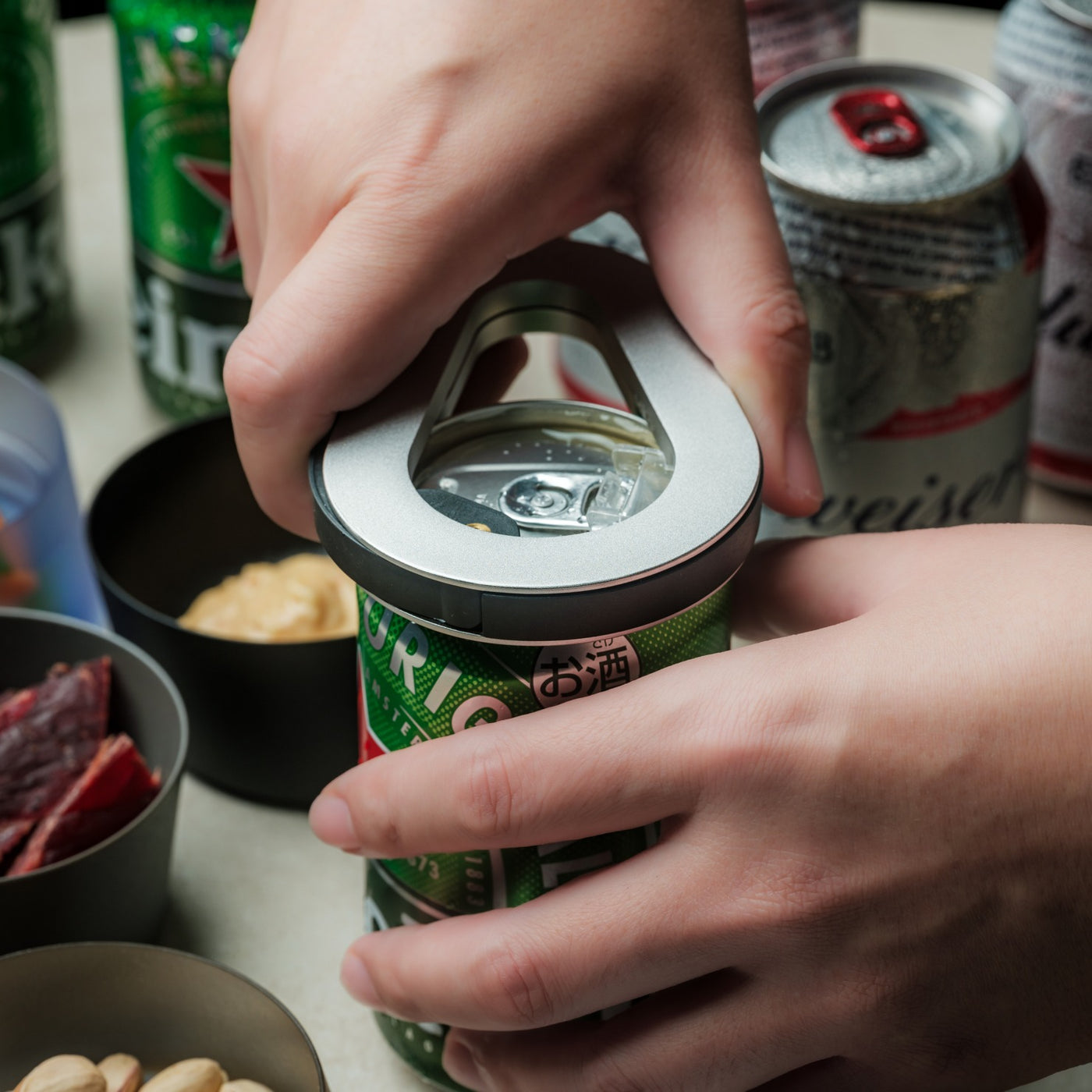
The problem with canned drinks at the beach has never been opening them. The pull tab handles that adequately. The problem is everything after: a small hole that warms the drink faster than it should, attracts every insect within range, and forces you to drink in a way that a can was never designed for. The DraftPro removes the entire top of the can in a single motion, leaving no sharp edges and turning any standard drink can into an open vessel with full and immediate access.
It locks onto the rim, cuts around the perimeter, and the lid comes away clean. What you are left with is essentially a metal cup, which changes the drinking experience from a can more than you might expect. A cold brew tastes different when you can actually smell it. A beer drinks the way a beer is supposed to drink. Canned wine, which has always suffered from its own opening, finally gets the same treatment a glass would give it.
What We Like
- The DraftPro removes the full lid in one clean motion with no sharp edges remaining on the rim, which is the design outcome every can opener should be working toward
- Turning any standard can into an open cup changes how canned drinks taste and how you experience them, which is a significant return for something that fits in a pocket
What We Dislike
- It works on standard-diameter cans only, so anything outside that size needs a different tool, which is worth knowing before the cooler is already packed
- The removed lid needs somewhere to go, which is a small but real consideration when you are trying to keep a bag organised on a beach with nowhere flat to set things down
4. Wuben G5
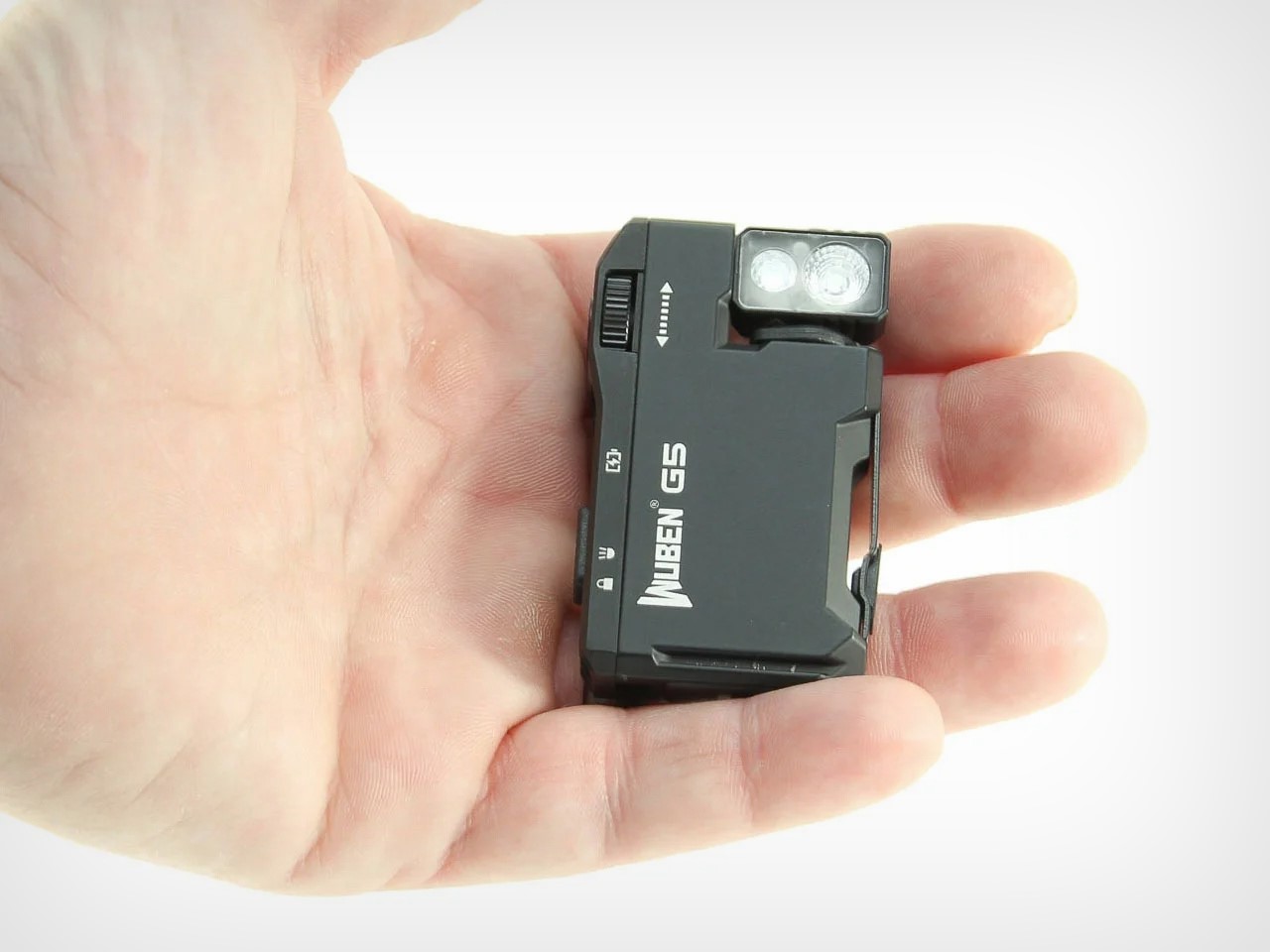
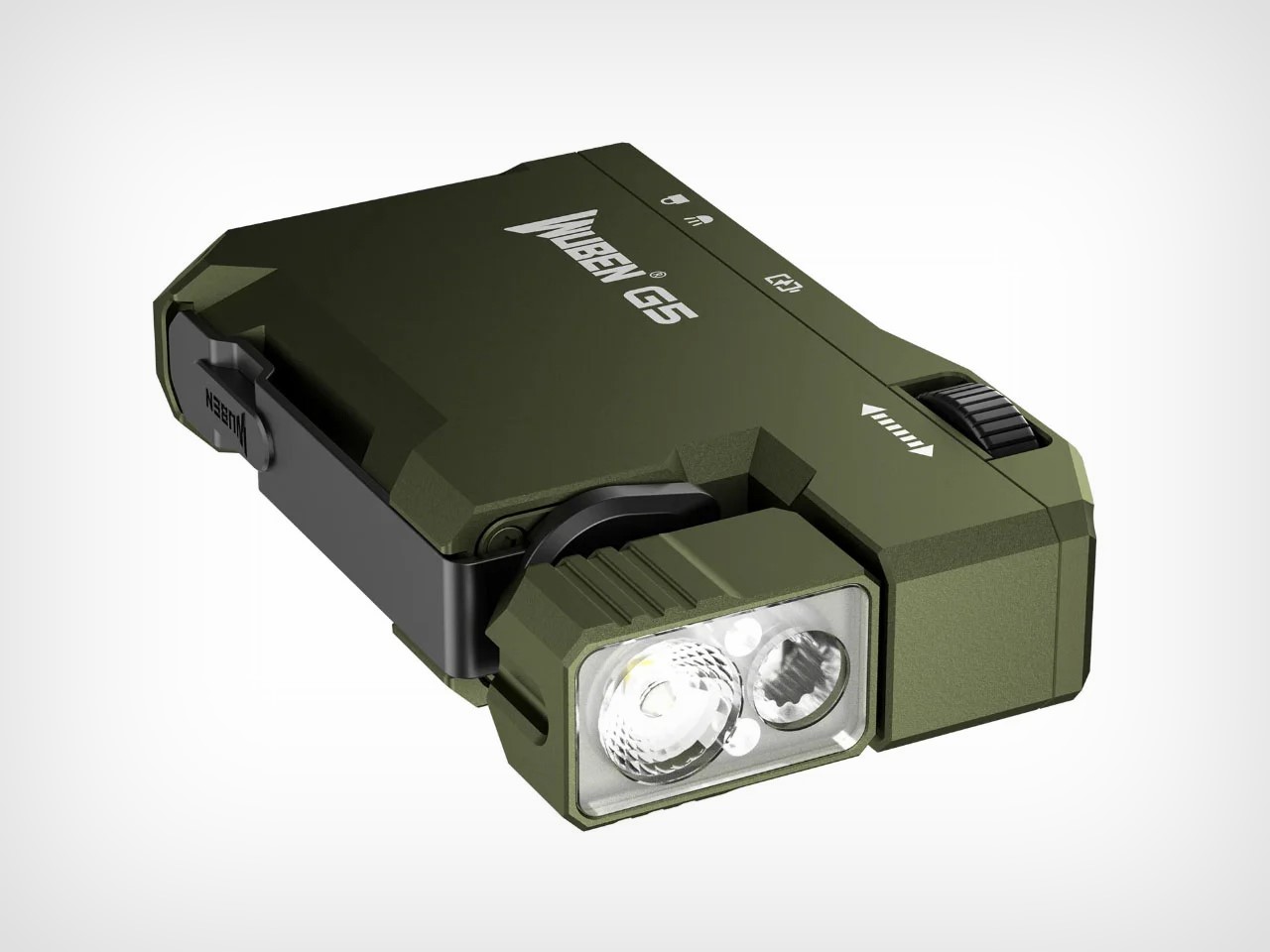
Most flashlights are too large to bother carrying and too dim to justify the space they take up when you do. The Wuben G5 is shaped and sized like a lighter, weighs 52 grams, and carries an IP68 waterproof rating down to two metres. It reaches 400 lumens across an 82-metre beam and rotates 180 degrees at the head so the light goes where it needs to go without repositioning the hand. A spring-tensioned clip grips fabric and straps. A magnetic base holds it to any metal surface without additional accessories.
At the beach, the use cases arrive the moment the sun drops: tide pool walks after golden hour, finding something in a dark bag, navigating a car park at the end of a long day, keeping a fire going in the right direction. USB-C charging is hidden behind the rotary tactile switch, a small detail that makes the whole object feel genuinely resolved. At $25, it sits in a price bracket where most comparable flashlights are forced to choose between bright and portable. The G5 does not choose.
What We Like
- The lighter-sized form factor and spring-tensioned clip mean it lives in a pocket and actually gets used, rather than sitting uncharged at the bottom of a drawer between trips
- IP68 waterproofing, a magnetic base, and USB-C charging at $25 is a combination that flashlights costing three times as much regularly fail to match
What We Dislike
- Battery runtime at full 400-lumen output sits around 50 to 60 minutes, which requires some forward planning on a long evening outing if you need consistent brightness throughout
- The blue-and-red emergency beacon is a feature worth having and absolutely worth leaving alone unless the situation genuinely calls for it
5. Hibear All-Day Adventure Flask
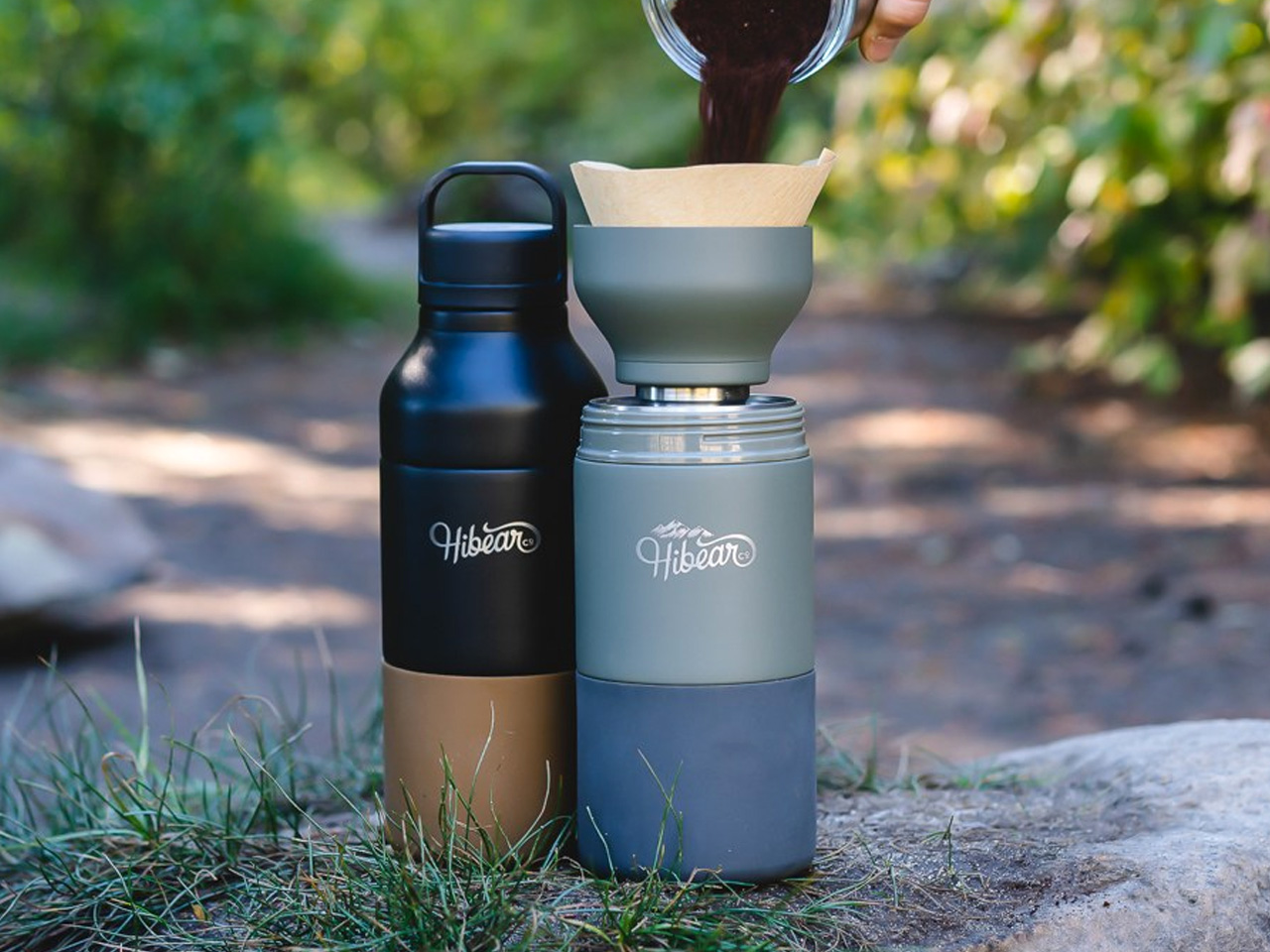
The Hibear All-Day Adventure Flask won a Red Dot Design Award in 2020, carries a five-year warranty, and performs six separate functions inside a single 32-ounce insulated stainless body. The interior is lined with non-breakable glass, which keeps flavours neutral regardless of what goes in. Split the body at its midpoint, invert the top section over a filter, and you have a pour-over coffee kit. The same configuration aerates wine properly rather than asking it to breathe through a small opening in a can lid.
A mesh insert brews tea, infuses water, or cold-brews coffee depending on how long you leave it. A slatted lid converts the flask into a cocktail shaker. A thermal core chills drinks without ice and without diluting them. The silicone tumbler built into the base pops out as a cup and absorbs the impact when the flask gets dropped, which it will. Hibear contributes to 1% for the Planet on every sale. For a beach day that starts before sunrise and ends after dark, this covers all of it.
What We Like
- The non-breakable glass interior keeps every drink tasting like the drink rather than the vessel, which is the detail that separates this from every other insulated flask currently available
- One object handling six functions means one fewer item to pack, which is the most honest possible argument any piece of design can make for its own existence
What We Dislike
- The full modular system involves multiple components that need tracking, cleaning, and reassembling, which adds genuine friction on days when simplicity is the only real priority
- Most users will settle into two or three functions regularly and barely reach for the rest, which is worth sitting with before committing to the price
The Best Beach Gear Is the Gear That Disappears
None of these five objects look like they were made for a promotional shoot. They were made to do something specific well enough that you reach for them without thinking about it. The amplifying speaker has no battery to watch. The DraftPro changes how a can of beer opens. The Wuben G5 weighs 52 grams and costs $25. The Hibear covers a full day at the beach without asking you to pack anything else around it.
The Camp Snap 2 asks you to look at the beach rather than reviewing photographs of it. That is the through-line: five objects that remove a specific frustration rather than introducing a new feature. The beach already has enough going on. The best gear for it stays out of the way and earns its place by being genuinely hard to leave behind.
The post 5 Best Beach Gadgets That Don’t Look Like They Were Designed by a Sunscreen Brand first appeared on Yanko Design.
from Yanko Design



0 Comments