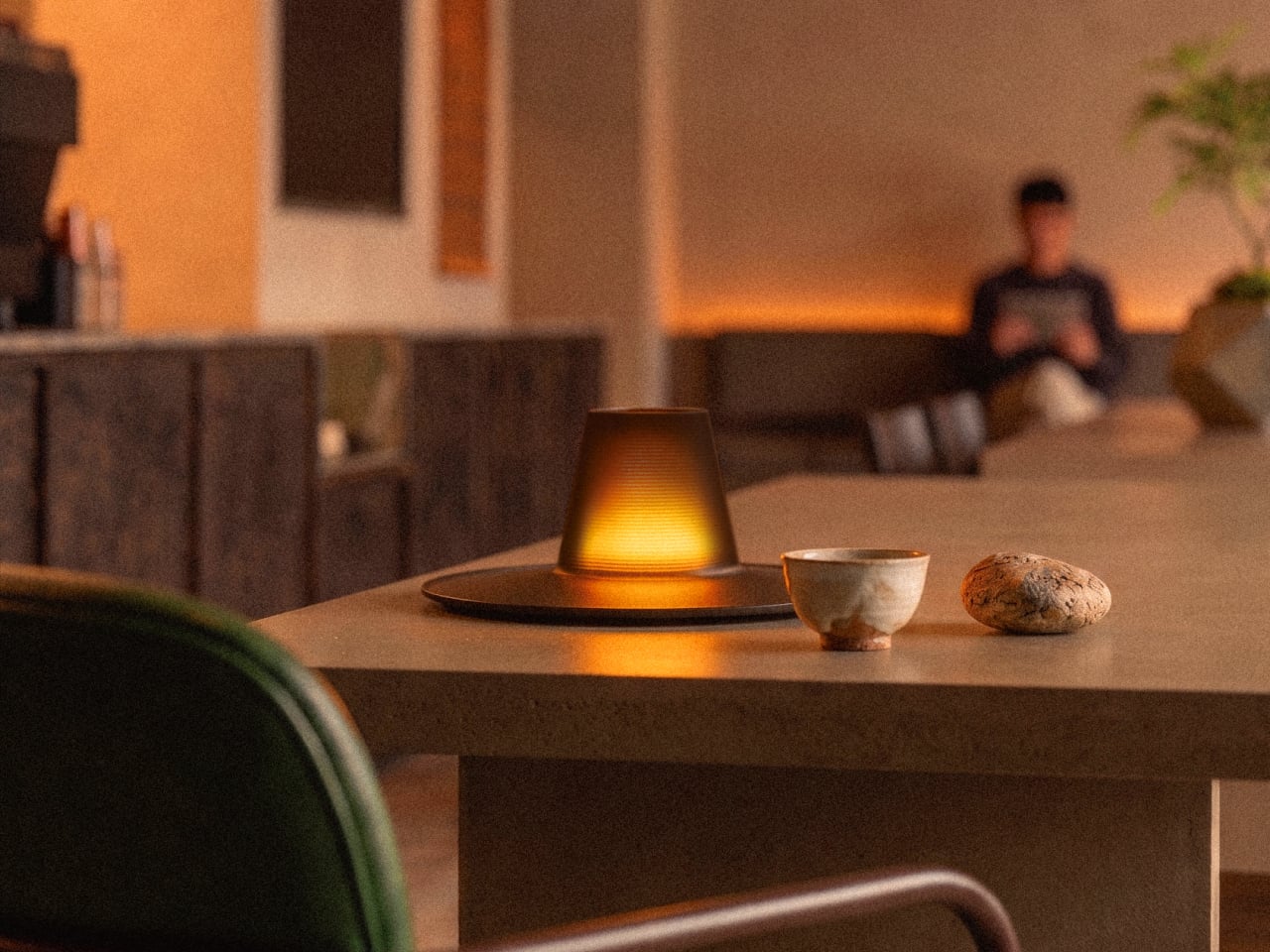
The gat is one of the more distinctive objects in Korean material culture. Woven from horsehair and bamboo and worn by scholars and noblemen during the Joseon Dynasty, it communicates social standing through form alone. Its silhouette, a tall cylindrical crown on a flat, wide brim, is immediately recognizable. What that shape might become in a different time is a question the GAT lamp was designed to answer.
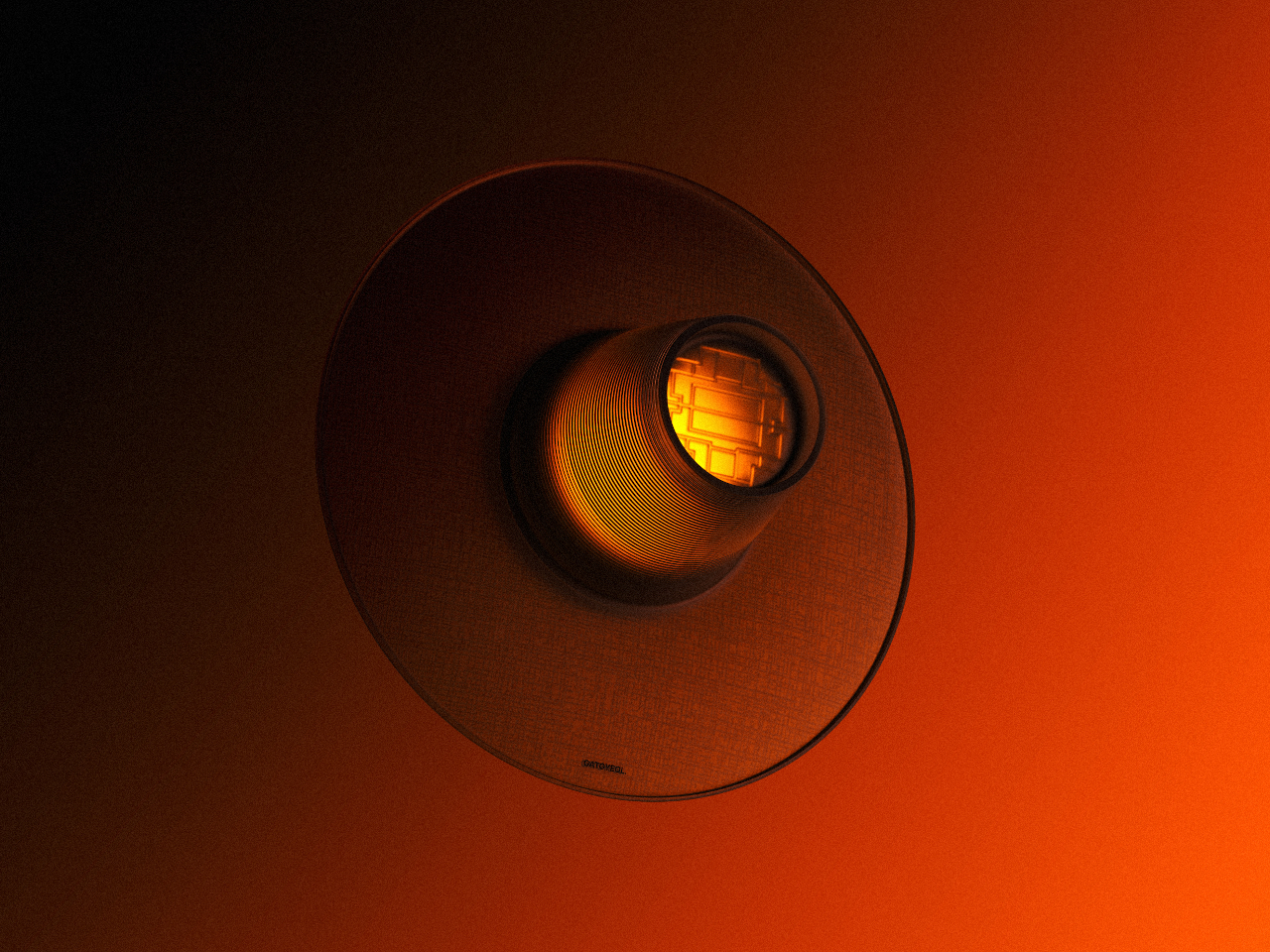
The lamp takes its name and form from the gat, guided by the concept of Ongojisin, a Confucian idea about discovering new value through tradition rather than reproducing it. The central body replicates the gat’s tall crown, covered in fine horizontal ridging that echoes the woven texture of traditional horsehair. The broad disc below re-creates the brim as a gently expanding, dish-like volume.
Designer: SAQ Design
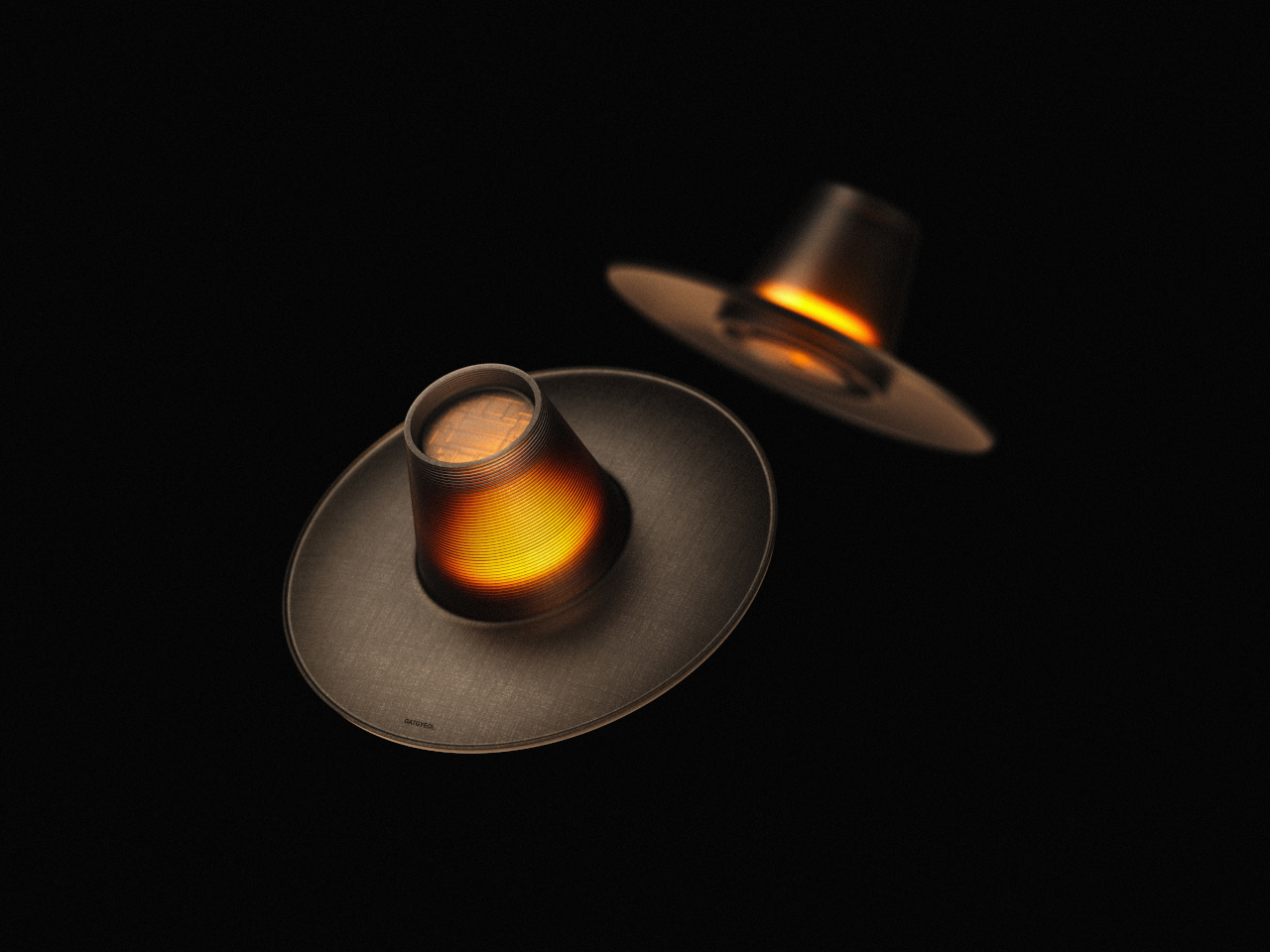
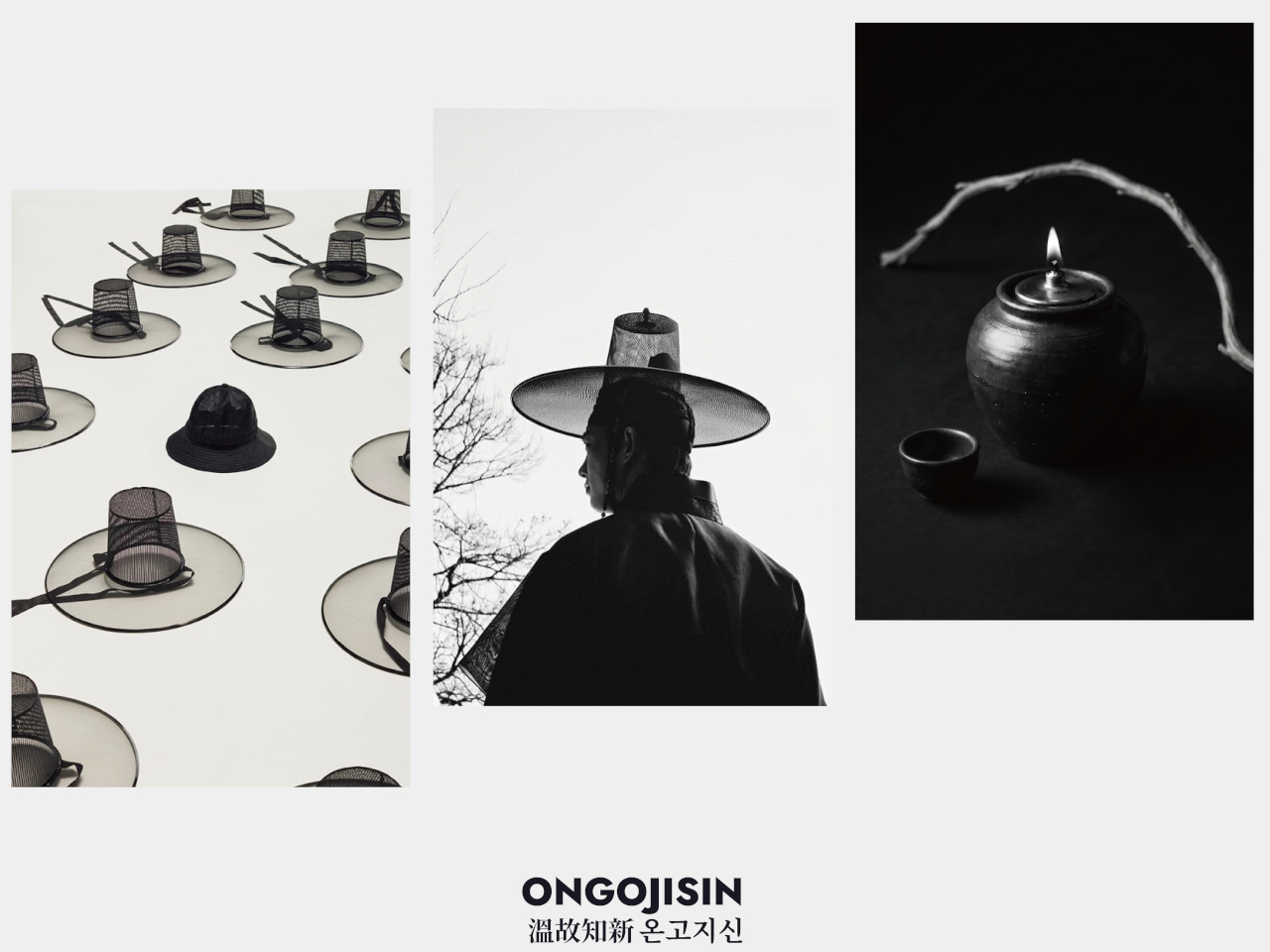
Ongojisin is usually translated as “warming the old to know the new.” The product title treats that not as a passive historical sentiment but as an active design instruction. Rather than styling a lamp to look vaguely traditional, the GAT takes the gat’s actual structure and recomposes it into a functioning lighting object, keeping every proportion and surface detail connected to a specific precedent.
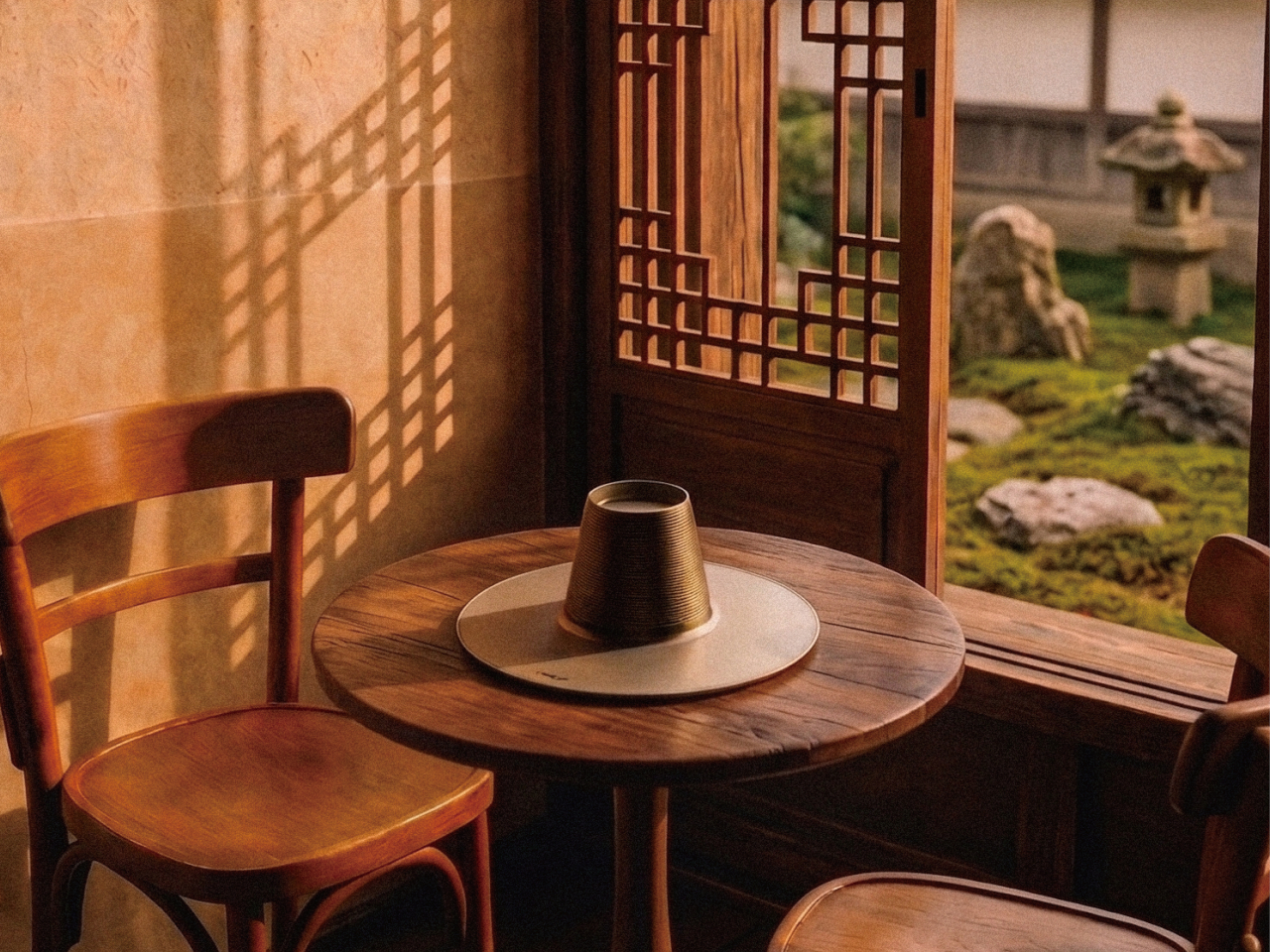
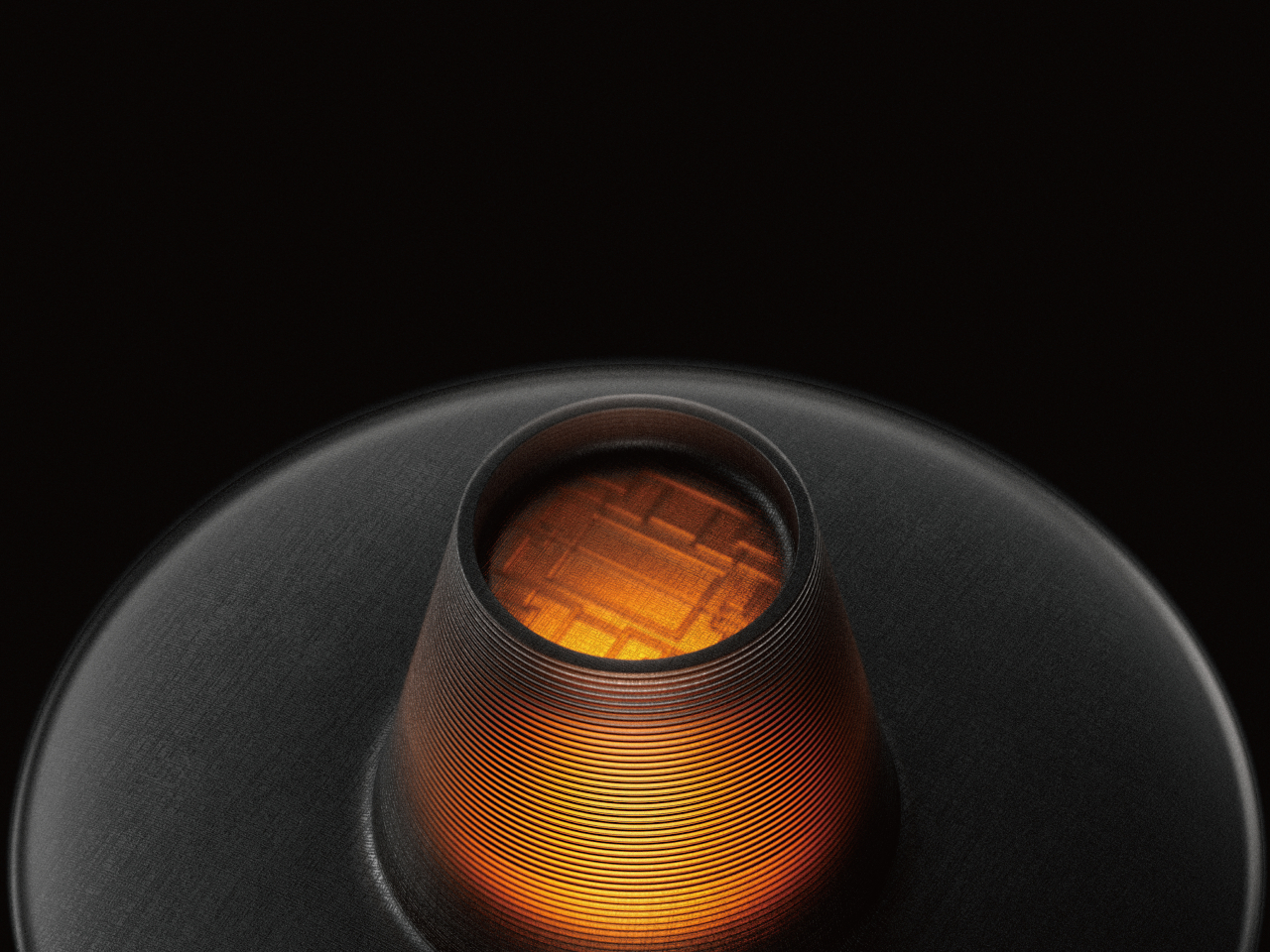
The interior of the crown carries a lattice pattern drawn from traditional Korean window screens, invisible in ordinary light. Switched on, warm amber filters through the ribbed surface much as it once moved through hanji paper, producing the same quality of diffused, indirect glow that gave candlelit rooms their particular atmosphere. Off, the lamp holds its form as a sculptural object without needing to perform.
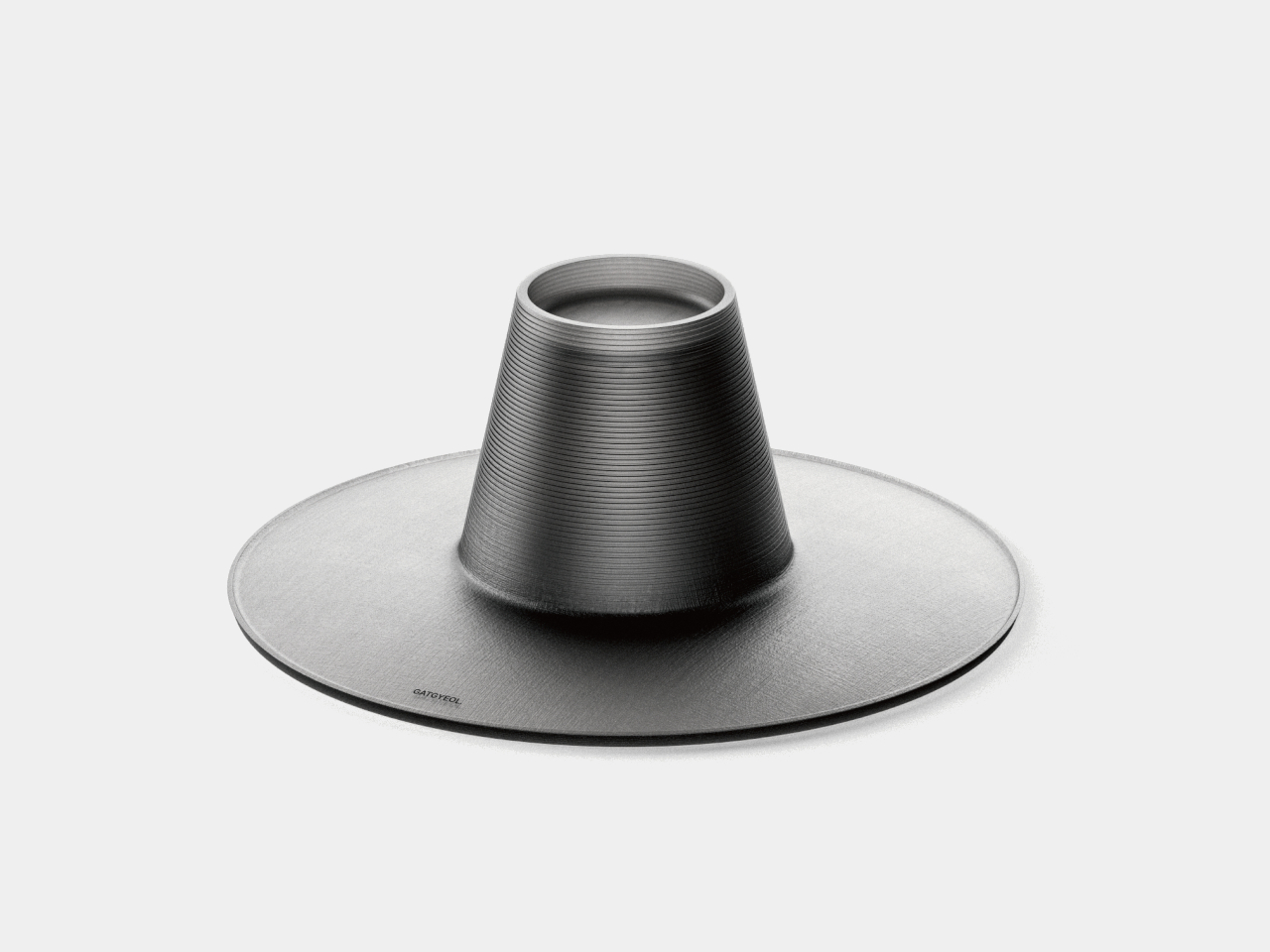
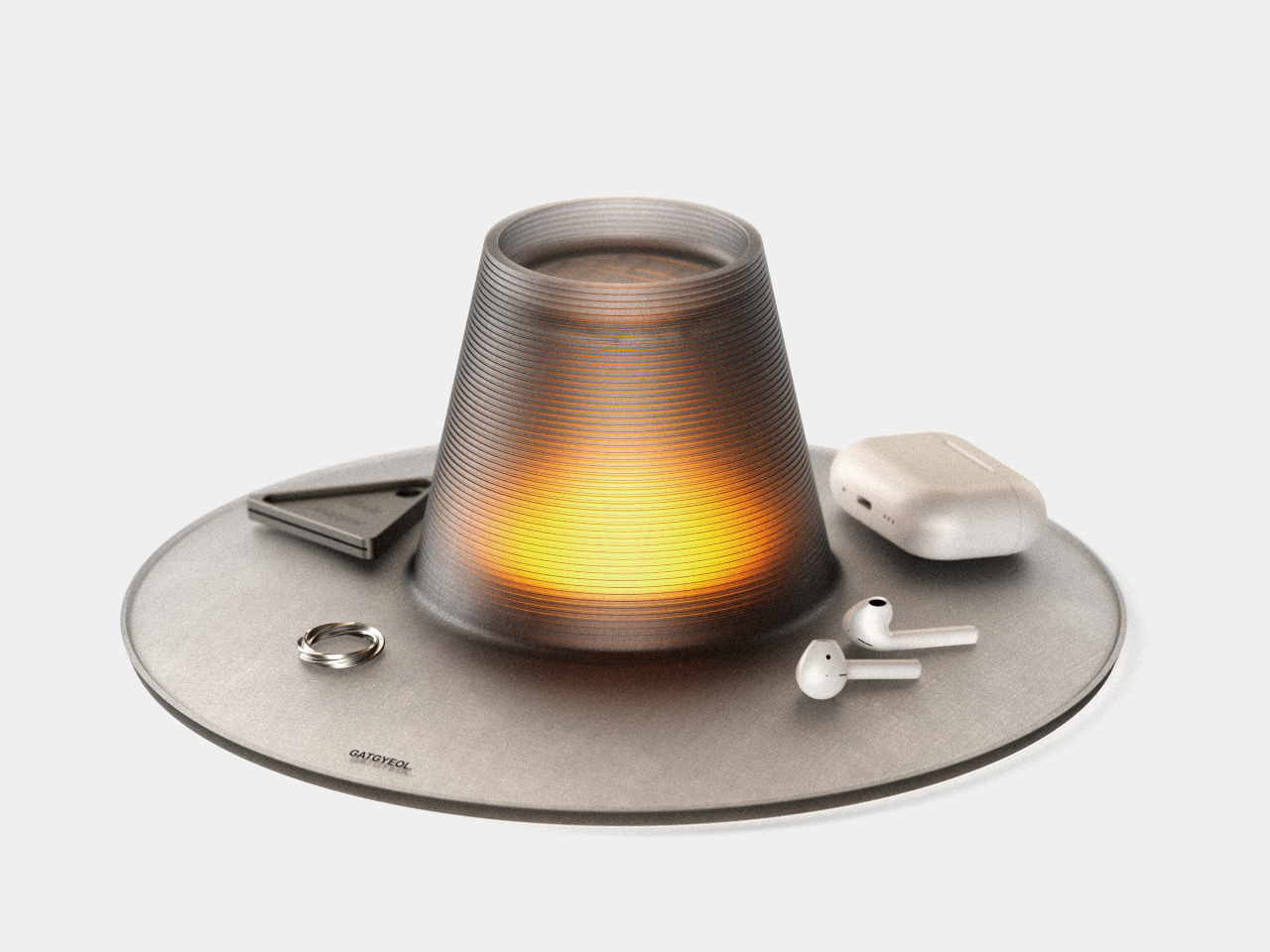
The wide disc does more than anchor the form. It serves as a tray, holding rings, earbuds, and whatever accumulates beside a lamp. Combining lighting with surface storage in a single object is uncommon in its category, and the gat’s broad brim is a natural vessel for it. An object worn historically to signal status is repurposed to hold what you put down at the end of the day.
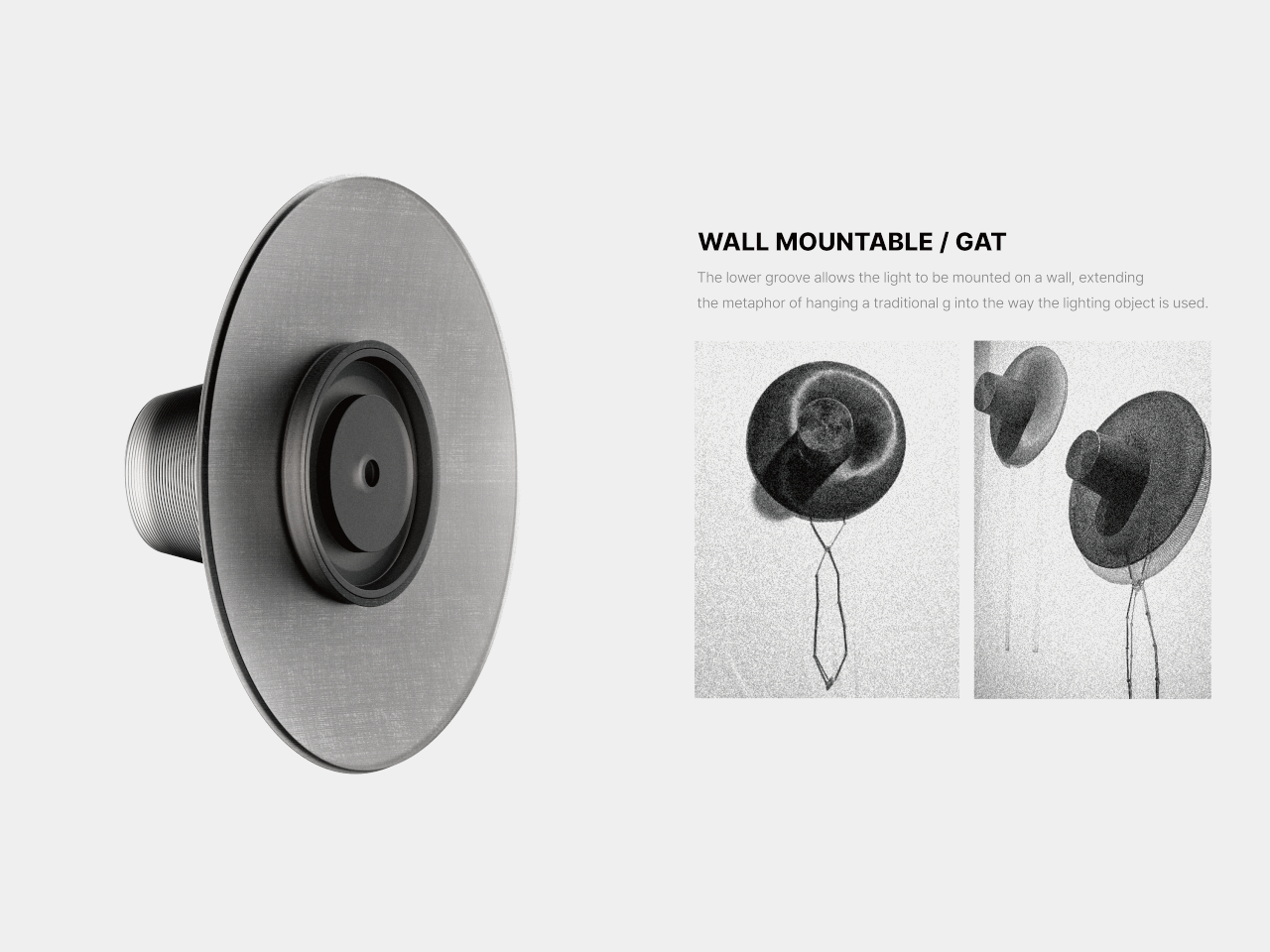
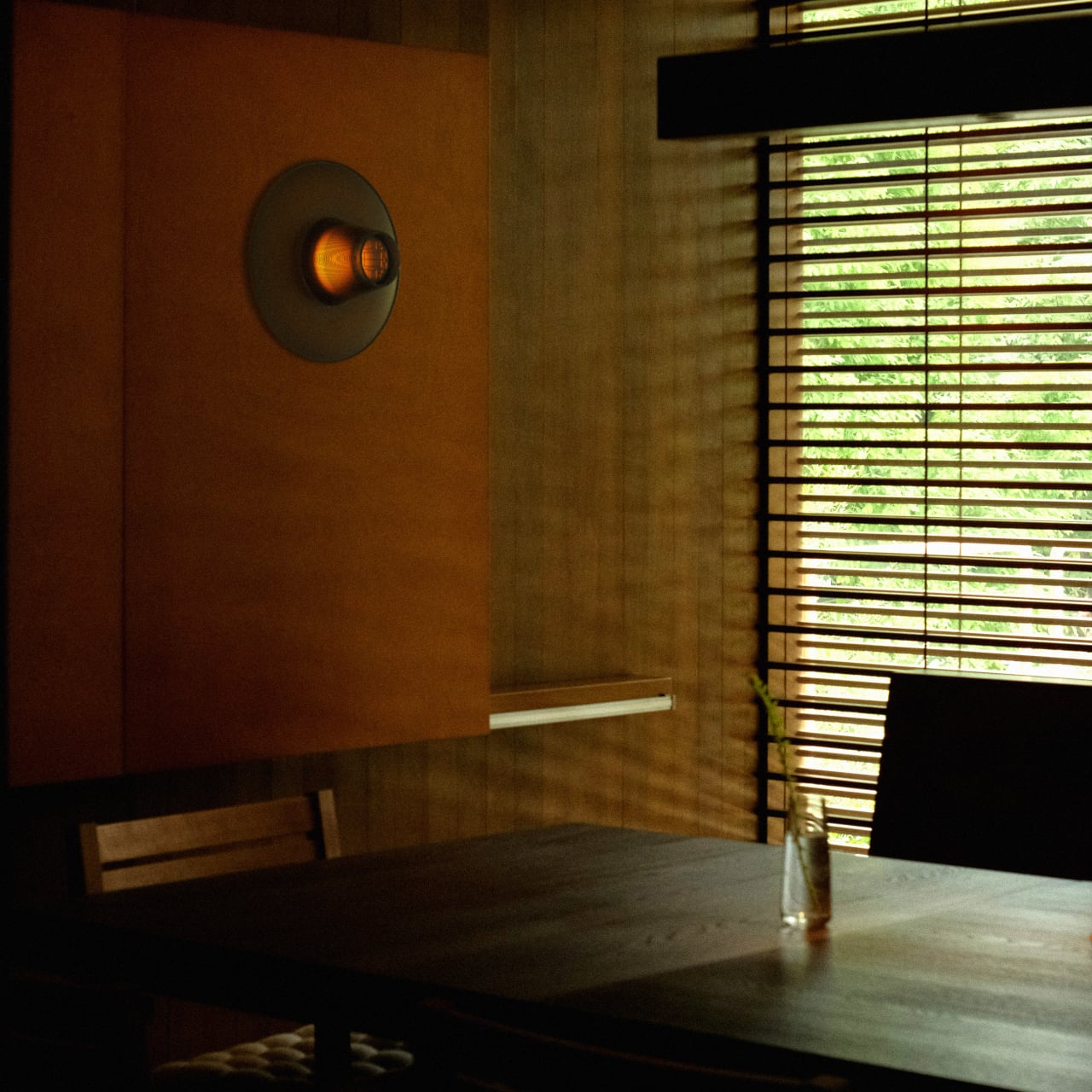
A groove on the underside allows the lamp to mount on a wall. A gat hung on a wall is a familiar image in traditional Korean households; the mounted lamp reproduces that image exactly but as a functioning light. The object becomes what the mounted gat always was: something that signals presence and considered taste in a room without requiring any explanation from its owner.
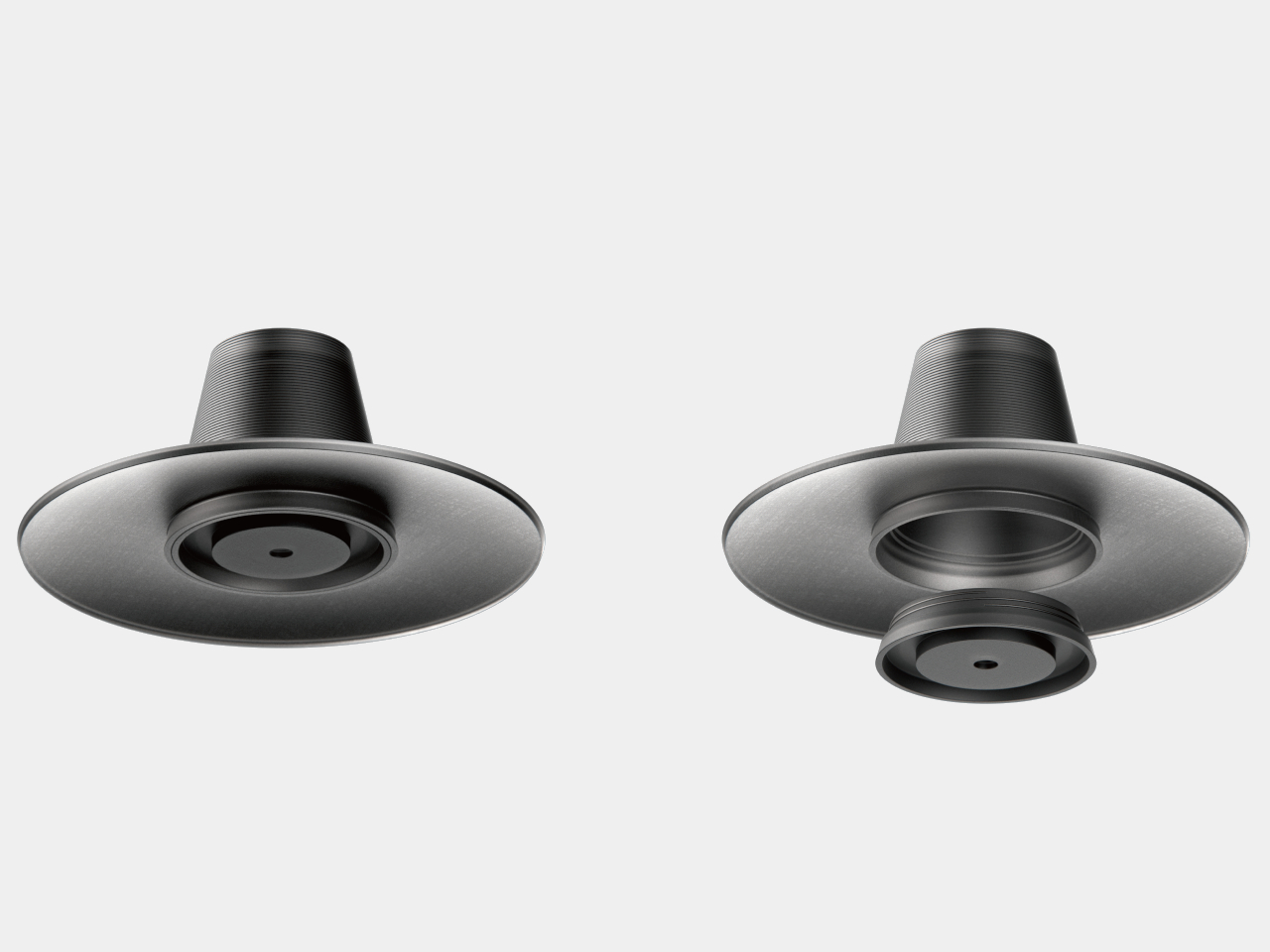
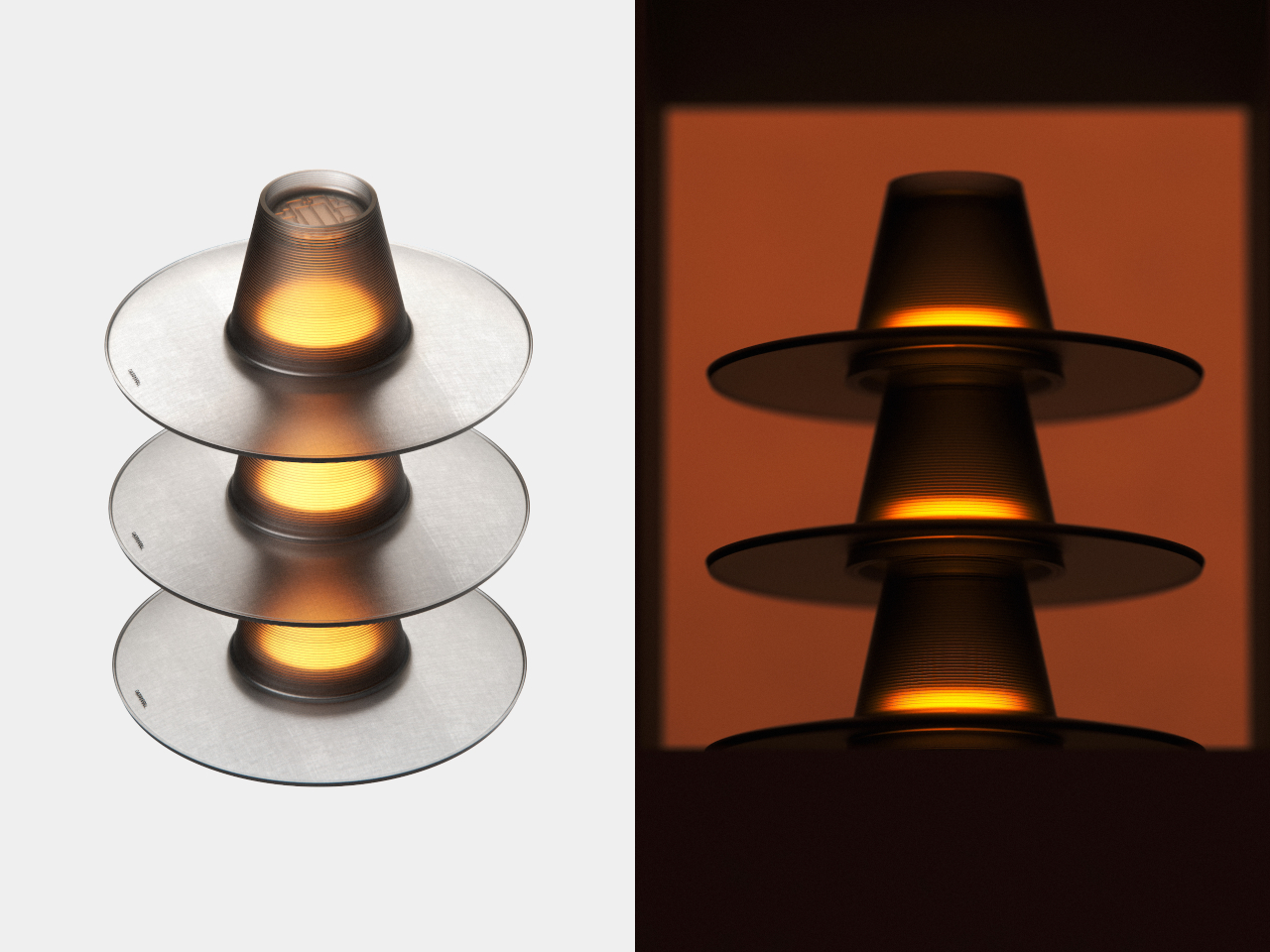
The lighting module attaches by twisting into place, mirroring how a traditional gat settled on the head: placed, rotated, secured. Multiple units can be stacked together. At no point does the design lose sight of the original. The horizontal ridging, the lattice pattern inside, the brim that becomes a tray, the groove that becomes a wall hook; each element traces back to the form it came from.
A gat was historically placed over a lamp to diffuse its flame; the hat and the light were always paired. The name for what covers a flame and the name for what sits on the head are the same word. The GAT lamp closes that loop, making the act of wearing light not a metaphor but the actual, literal function of the object.

The post This Korean Hat Was Always Meant to Be a Lamp and Finally Became One first appeared on Yanko Design.
from Yanko Design



0 Comments